
G20Mn5 Casting: EN 1.6220 Low-Alloy Steel Castings by Leesh Holdings
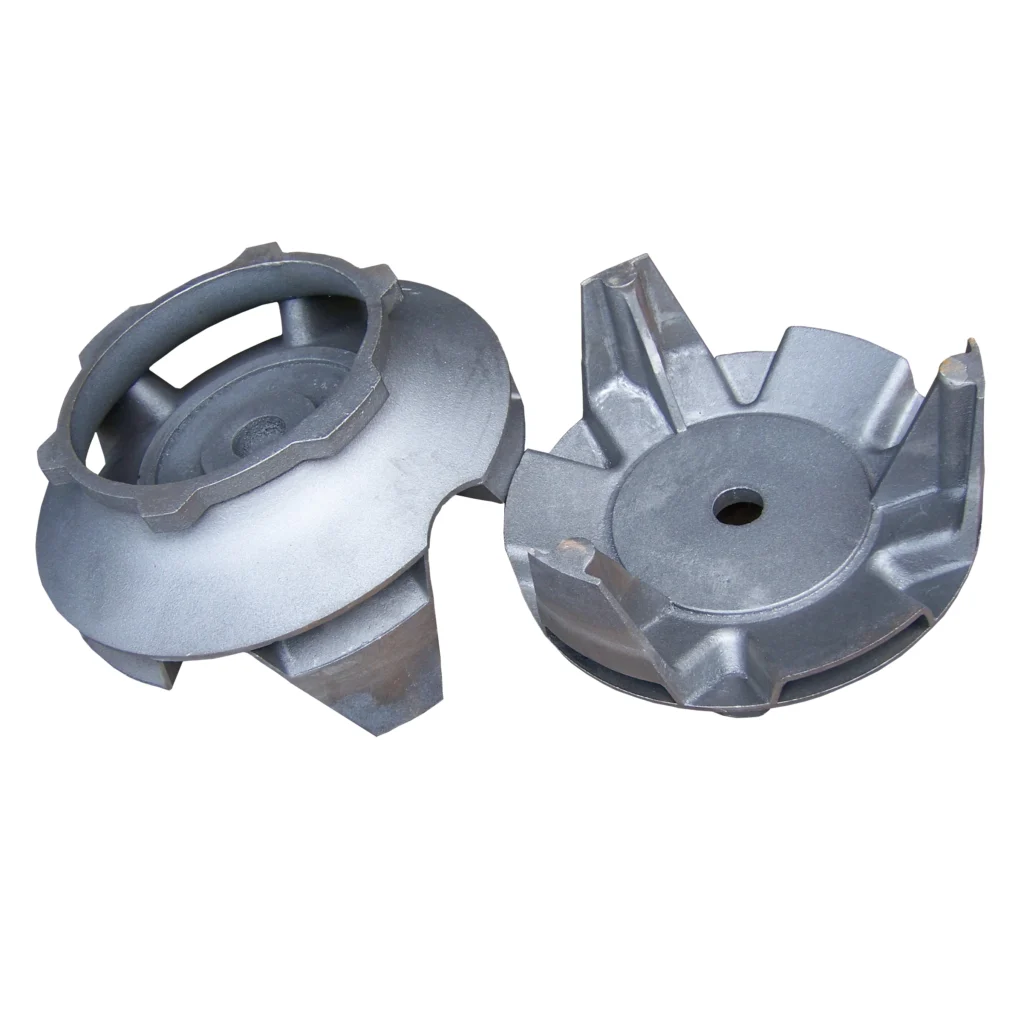
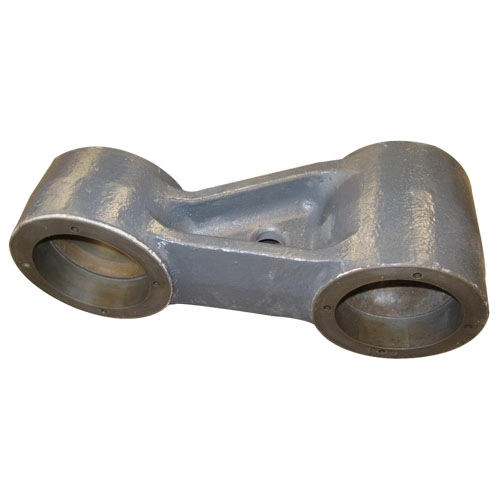
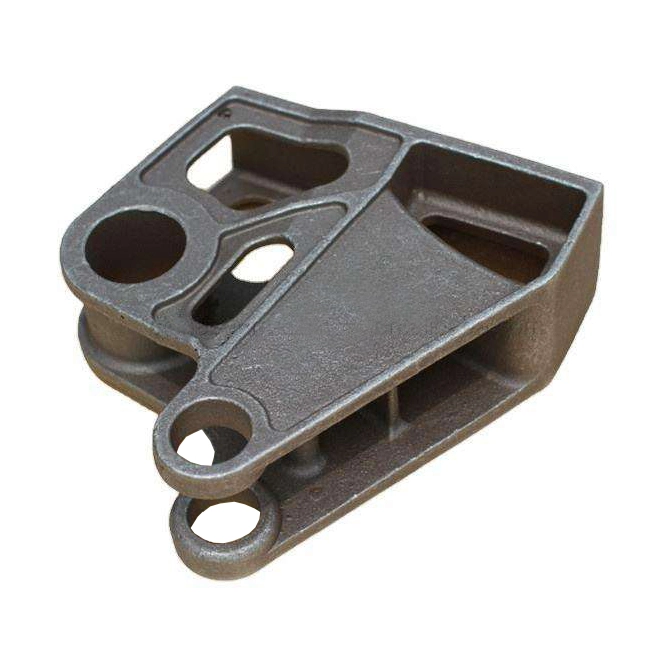
G20Mn5 casting is the low-carbon, manganese-alloyed cast steel that engineers specify when a welded structure still has to perform at sub-zero temperature. Sold under European material number 1.6220 and listed in EN 10293, EN 10340 and EN 10213-3, this G20Mn5 steel casting is the cast-steel counterpart of the familiar S355 structural steel family — and it is one of the most frequently poured grades at our foundry in Shenyang, China. Leesh Holdings supplies 1.6220 cast steel as sand castings and investment castings, machined to drawing, in normalised (+N) or quenched-and-tempered (+QT) condition.
Chemical Composition of G20Mn5 Cast Steel
The chemistry below is the analysis basis of our EN 10293 cast steel practice for this grade. Carbon is deliberately held low so the material stays weldable; strength comes from manganese instead.
ElementContent (mass %)Role in the castingCarbon (C)0.17 – 0.23Keeps the heat-affected zone soft enough after weldingManganese (Mn)1.00 – 1.60Main strengthening element, buys the 300 MPa yield classSilicon (Si)≤ 0.60Deoxidiser, supports fluidity in thin sectionsPhosphorus (P)≤ 0.020Held low to protect cold toughnessSulphur (S)≤ 0.020Held low against hot tearing in the mouldCr / Mo / Ni / Cu / V≤ 0.30 / 0.12 / 0.80 / 0.30 / 0.03Residual or trace elements
On request we tighten P and S below the standard ceiling for low-temperature projects — a lower carbon equivalent means an easier weld on site.
Mechanical Properties (+N and +QT)
Every G20Mn5 casting is heat treated before delivery; we do not ship as-cast material for welded duty. Values below apply to the thin test tier of the standard — heavier sections follow the reduced EN 10293 tiers, which we state on the order confirmation.
Property+N normalised+QT quenched & temperedTensile strength Rm480 – 620 MPa500 – 650 MPaYield strength Rp0.2≥ 300 MPa≥ 300 MPaElongation A≥ 20 %≥ 22 %Impact energy (V-notch)≥ 27 J at −30 °C≥ 27 J at −40 °CHardness≈ 170 HB≈ 210 HV
Sand Casting and Investment Casting Routes
Two production routes cover the full size range of low alloy cast steel G20Mn5 orders:
G20Mn5 sand casting
Resin-bonded sand is our route for heavy structural geometry: cast steel nodes for long-span roofs, mill frames, housing and base parts from roughly 20 kg up to several tonnes. Sand casting gives the riser freedom thick sections need to feed properly, and machining allowances follow GB/T 6414 or your drawing.
G20Mn5 investment casting
The lost-wax line handles the lighter, tighter parts — brackets, lugs, valve bodies and fittings down to gram scale, with near-net surfaces and tolerance classes that save hours of CNC time. Complex cored geometry that would need multiple sand cores is often cheaper as an investment casting.
Where This Grade Is Used
- Cast steel nodes — column-foot forks and branching joints in stadiums and stations, welded to S355 tube and plate
- Rail and transit — bogie brackets and axle-box housings loaded in fatigue
- Mining and mineral processing — frames, housings and impact-loaded wear-adjacent parts
- Pressure and cold service — valve bodies and pump casings under the EN 10213-3 low-temperature listing
- Port and offshore steelwork — lifting lugs and connection castings with documented low-temperature toughness
Welding the Casting on Site
Because carbon stops at 0.23 %, the carbon equivalent of a G20Mn5 casting normally lands between 0.35 and 0.45 %, and published welding guidance for 1.6220 gives a preheat window of 20–150 °C with a maximum interpass temperature of 350 °C. Low-hydrogen electrodes (E5015 / E5016) or ER50-6 wire with an Ar/CO₂ mix match the 500 MPa class; use nickel-alloyed filler when the joint itself must prove −40 °C impact. Grind weld preparations to bright metal and inspect before the first arc — our team can advise preheat ranges for your wall thickness and restraint level.
International Designation Cross-Reference
MarketDesignationStandardEuropeG20Mn5 / 1.6220 (legacy GS-20Mn5, W-Nr.
| 1.1120) | EN 10293 · EN 10340 · EN 10213 | |
| China | ZG20SiMn (also ZG20Mn for large castings) | GB/T 7659 · JB/T 6402 |
| USA | A148 Grade 80-50 (550-345) | ASTM A148/A148M |
| Australia / NZ | L1A / L1B — the 1.5 % manganese low-alloy family | AS 2074 (AS/NZS 2074) |
Tell us the designation on your drawing and the acceptable substitutes; we write the agreed grade, condition and test temperature into the production order.
FAQ
What is G20Mn5 casting material?
It is a low-carbon manganese low-alloy cast steel, material number 1.6220, listed in EN 10293 for general engineering, EN 10340 for structural use and EN 10213-3 for low-temperature pressure castings. It pairs roughly 300 MPa minimum yield with good weldability and guaranteed impact toughness down to −30 or −40 °C.
Which condition should I order, +N or +QT?
Order +N normalised when room-to-−30 °C toughness is enough; order +QT quenched and tempered when the structure must prove −40 °C impact or needs the higher elongation floor. If your drawing is silent, we will recommend one against the service temperature and joint design.
Is a G20Mn5 sand casting the same quality as an investment casting?
Both routes pour the same alloy to the same heat treatment and test requirements. The difference is geometry and size: sand casting suits heavy sections and large nodes, investment casting suits light, intricate, near-net-shape parts. Internal soundness is verified the same way — UT, MT or PT to the agreed acceptance level.
Can you machine and weld the castings before shipment?
Yes. In-house CNC covers datum faces, bolt patterns and bore work after heat treatment, and our weld cell can deliver cast-and-weld assemblies with preheat and interpass records. Machining after heat treatment keeps the properties of the G20Mn5 steel casting intact at the finished surfaces.
What information do you need for a quotation?
A drawing or 3D model (STEP / IGES), the grade and standard called out, single-casting weight and maximum wall, quantity, and any impact or NDT requirement. With those five items we reply with a castability review, pricing and lead time.
Send your enquiry: david.lee@leesh.cn — Leesh Holdings Co., Ltd., Shenyang, China. Custom pricing is based on each part’s requirements; contact us for pricing on your G20Mn5 casting project.
