
EN-GJS-800-2 Casting | High-Strength Spheroidal Graphite Iron Components
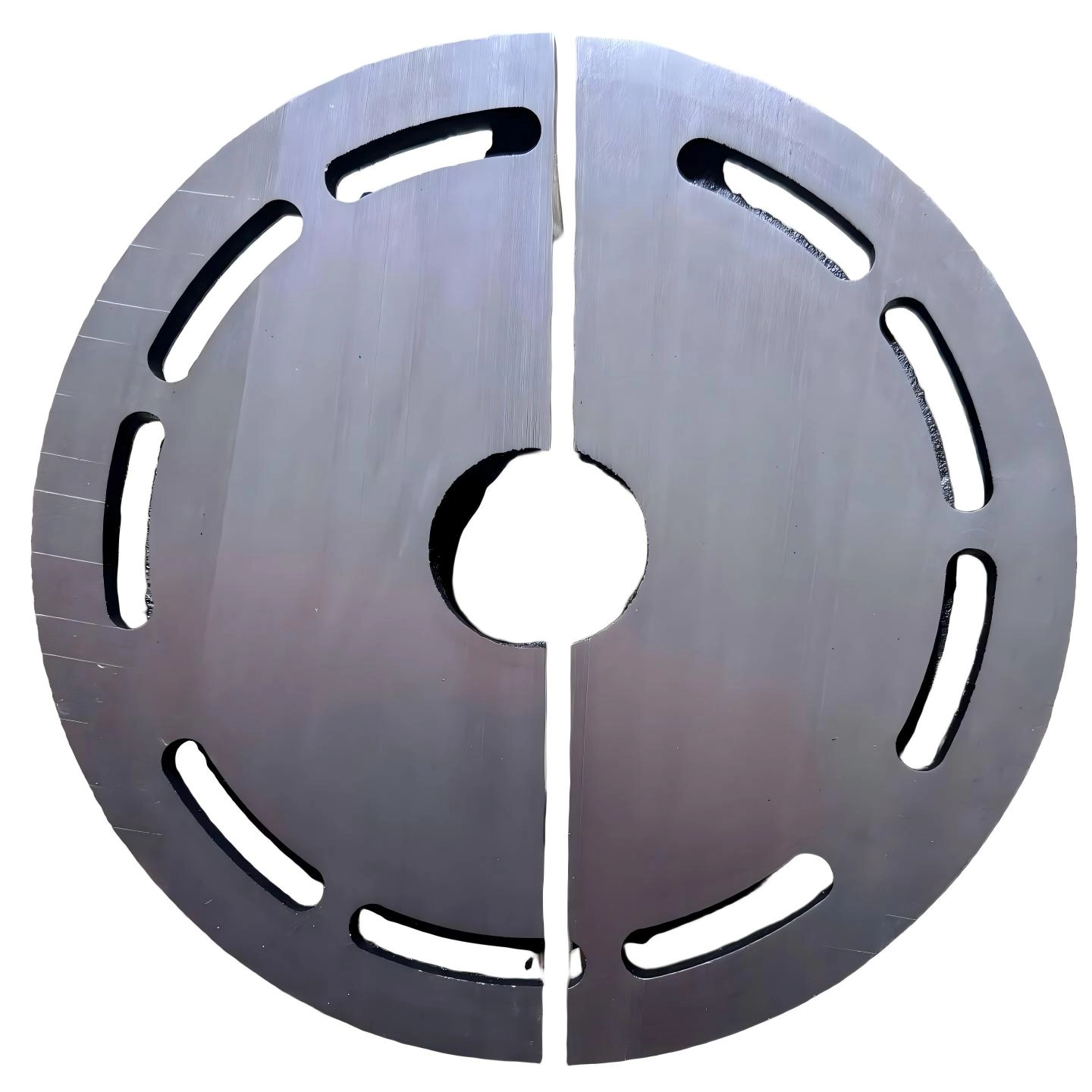
Leesh Holdings manufactures EN-GJS-800-2 casting parts in ductile iron for customers who need high tensile strength, dependable castability and stable delivery. The grade is also known by its EN 1563 casting code EN-JS1080, the German material number 0.7080 and the traditional name GGG80. With a minimum tensile strength of 800 MPa and controlled elongation, it carries heavy static and dynamic loads that ordinary grey iron cannot handle. Our sand casting foundry supplies these parts from 0.5 kg up to several tonnes — heat treated, machined and tested to your drawings.
What Is EN-GJS-800-2 Casting?
EN-GJS-800-2 casting is a high-strength grade of spheroidal graphite cast iron specified in the European standard EN 1563. The designation is easy to read: 800 is the minimum tensile strength in MPa and 2 is the minimum elongation in percent. A pearlitic matrix supported by well-formed nodular graphite gives the material strength close to cast steel, while sand casting keeps the freedom of geometry and the tooling cost low — one reason international buyers also describe it as an EN-GJS-800-2 ductile iron casting.
Reaching this strength level reliably takes more than good melting practice. We tune the chemistry with Cu, Ni, Mo and Sn additions and complete a full heat-treatment cycle, so the promised values hold in every batch. Purchasers search the same material under several names — EN GJS 800 2 casting, 0.7080 ductile iron casting and GGG80 ductile iron — while EN-JS1080 casting is simply the grade code printed on EN 1563 drawings. All of these names point to one family of high-strength spheroidal graphite iron.
EN-GJS-800-2 Casting Material Property
The EN-GJS-800-2 casting material property values below follow EN 1563 for separately cast test pieces; values on samples cut from the casting itself are agreed at order stage. Chemistry is adjusted by our metallurgical team to each wall thickness, heat-treatment route and application, and binding limits follow customer requirements.
Chemical Composition (typical, wt. %)
| C | 3.20 – 3.80 | Mg | 0.03 – 0.06 |
|---|---|---|---|
| Si | 1.80 – 2.60 | Cu | ≤ 0.80 |
| Mn | ≤ 0.60 | Ni | ≤ 1.00 |
| P | ≤ 0.035 | Mo | ≤ 0.40 |
| S | ≤ 0.020 | Cr | ≤ 0.10 |
Typical analysis for a pearlitic high-strength grade; alloy additions depend on section size and heat treatment. Binding limits follow customer requirements.
Mechanical Properties (EN 1563, separately cast test bars)
| Property | Typical value | Notes |
|---|---|---|
| Tensile strength Rm | ≥ 800 MPa | Minimum per EN 1563 |
| 0.2 % proof strength Rp0.2 | ≥ 480 MPa | Minimum per EN 1563 |
| Elongation A | ≥ 2 % | Minimum per EN 1563 |
| Brinell hardness | 248 – 352 HBW | Typical production range |
| Matrix | Pearlitic, optionally tempered martensitic | After normalizing or quench and temper |
| Nodularity | ≥ 85 % | Metallographic rating on production sample |
Heat Treatment & Microstructure
A controlled heat-treatment route turns the as-cast structure into the strength the standard promises. Typical practice is normalizing at 880 – 920 °C with air cooling, followed by tempering at 550 – 620 °C to balance hardness and toughness. Demanding sections are oil or polymer quenched and tempered, and tight-tolerance parts receive stress-relief annealing after rough machining. This is the route behind every EN-GJS-800-2 casting we ship for gears, high-load brackets and press components.
 GGG80 ductile iron | 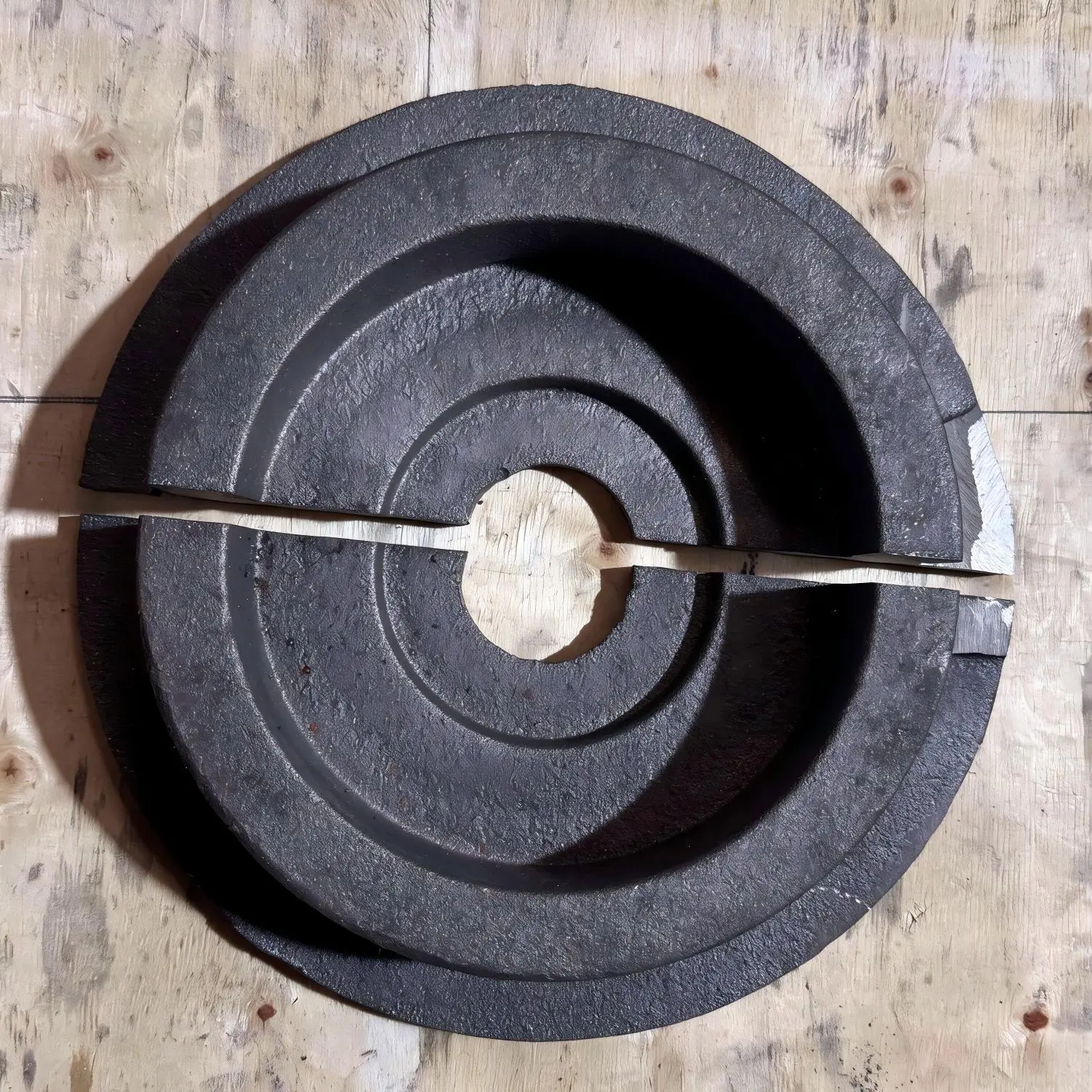 Centrifuge high-load drive wheel |
Send your drawings — get EN-GJS-800-2 pricing within one working day
Or email us directly: sales@leesh.cn
Manufacturing Process Flow of EN-GJS-800-2 Casting
Every EN-GJS-800-2 casting follows the controlled production route below, from pattern storage to export packing. The key controls listed beside each step are what keep results repeatable, batch after batch.
| Step | Process | Key control |
|---|---|---|
| 1 | Pattern & tooling | Resin or metal pattern; shrinkage and machining allowances verified |
| 2 | Sand molding | Furan resin-bonded sand; compaction, venting and coating checks |
| 3 | Melting & spheroidizing | Medium-frequency induction furnace; Mg cored-wire treatment |
| 4 | Chemistry analysis | Spectrometer sample before pouring; corrective additions recorded |
| 5 | Pouring | 1,380 – 1,420 °C; pouring time and mould records |
| 6 | Shakeout & fettling | Knockout, riser and gate removal, grinding |
| 7 | Heat treatment | Normalizing + tempering or quench and temper; furnace charts archived |
| 8 | Machining | CNC turning, milling, boring and drilling to drawing |
| 9 | Inspection & testing | Tensile, hardness, metallography, UT/MPI, CMM report |
| 10 | Surface treatment & packing | Primer or painting, anti-rust oil, export wooden cases |
 Sand molding line | 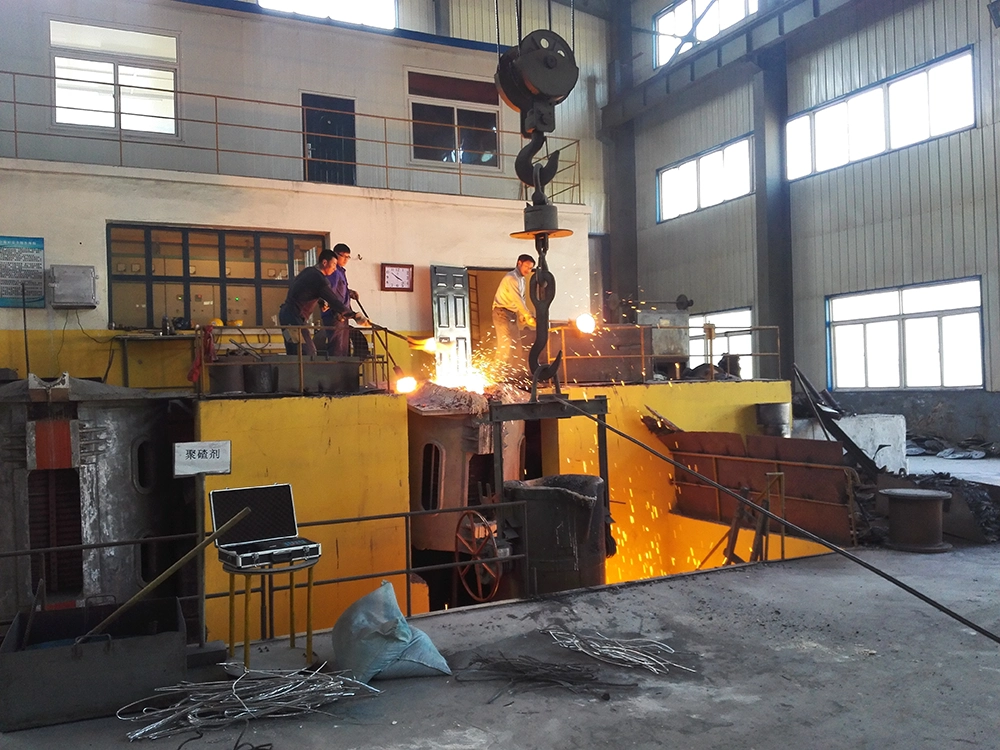 Melting & spheroidizing | 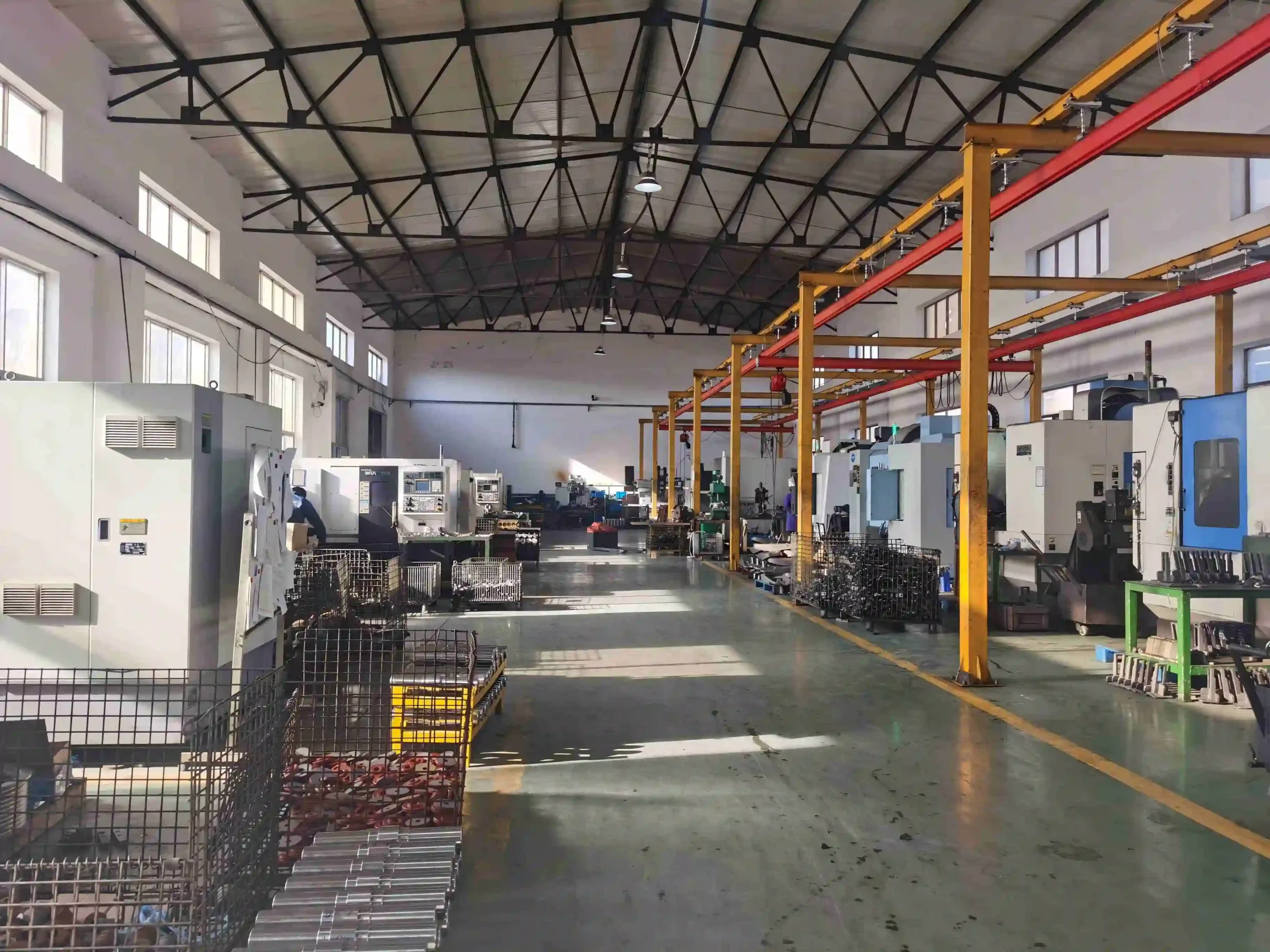 CNC machining shop |
Sand casting keeps tooling cost low and accepts complex geometries that die casting cannot reach, which suits the medium volumes and heavy sections typical of this grade. For higher volumes we can quote shell-mould or lost-foam alternatives after reviewing the casting design with you.
Typical Applications of EN-GJS-800-2 Casting
Where a design must carry high load in a compact envelope, EN-GJS-800-2 casting offers a stronger alternative to EN-GJS-500-7 or EN-GJS-700-2 without moving to cast steel. Typical uses include:
| Industry | Typical parts | Why this grade |
|---|---|---|
| Power transmission | Gears, sprockets, pulleys, gear blanks | High strength with clean machinability |
| Commercial vehicles | Axle and suspension parts, brackets, flywheels | Fatigue resistance under dynamic loads |
| Hydraulic & fluid power | Cylinder heads, pump housings, manifold blocks | Strong, pressure-tight housings |
| Mining & cement | Crusher frames, wear-plate supports, mill components | High static strength in abrasive surroundings |
| Press & machine tools | Die holders, rams, columns, machine bases | Rigidity and vibration damping |
| Energy & general engineering | High-load housings, bearing seats, rotor supports | Strength close to cast steel at lower cost |
If a part needs more toughness at a similar strength level, ask about austempered ductile iron (ADI) to EN 1564; if loads are moderate, the EN-GJS-400 to EN-GJS-700 series is the more economical answer. Both routes are produced in the same workshop.
Quality Control & Certification
Each EN-GJS-800-2 casting is released against the drawing, the material standard and the agreed inspection plan, so what you approve at sample stage is what you receive in serial production.
- EN 10204 3.1 certificates with every shipment; 3.2 and third-party inspection (SGS, BV, TÜV) on request
- In-house tensile, hardness and metallographic testing with nodularity rating
- Ultrasonic testing to EN 12680-3 and magnetic particle inspection to EN 1369 for critical areas
- CMM dimension reports and first-article inspection for new projects
- Full traceability from heat number to packing list
Frequently Asked Questions
What does the grade name EN-GJS-800-2 mean?
EN-GJS marks spheroidal graphite cast iron under EN 1563, 800 is the minimum tensile strength in MPa, and 2 is the minimum elongation in percent. It is a high-strength grade that relies on alloy design and heat treatment rather than as-cast properties alone.
Is GGG80 the same material as EN-GJS-800-2?
Yes. GGG-80 with the material number 0.7080 is the former DIN designation, and EN-JS1080 is the casting grade code in EN 1563. Both names correspond to today’s EN-GJS-800-2 casting, so drawings written under the old standard can be quoted directly.
Can you guarantee 800 MPa in heavy sections?
Within the wall-thickness ranges covered by EN 1563, yes. We raise hardenability with Cu, Ni and Mo, apply normalizing or quench and temper, and confirm the results on test bars cast with your parts before release.
What information do you need for a quotation?
Please send a 2D PDF or 3D model, estimated weight, annual quantity, target material standard and any machining or testing requirements to sales@leesh.cn. Our engineers reply with price, lead time and a process proposal, usually within one working day.
Do you deliver fully machined and inspected parts?
Yes. CNC machining, surface treatment and export packing are handled in-house or with audited partners, and every shipment leaves with EN 10204 3.1 certificates and, when required, third-party inspection reports.
Get a Quote for EN-GJS-800-2 Castings
Send your drawings to our engineering team and receive a detailed offer for EN-GJS-800-2 casting within one working day — price, lead time, process proposal and certificate options all included.
Prefer email? Write to sales@leesh.cn and we reply within one working day.
