
ADI Casting (Austempered Ductile Iron)
is widely recognized as a excellent engineering material that have the both advantages of cast iron and steel. Through austempering process, standard ductile iron is transformed into a high-strength material. The method in the isothermal transformation conducted in a molten salt bath, which creates a unique ausferritic microstructure. This specialized heat treatment ensures that the final product possesses the ductility of iron with the sheer strength of steel.
The main characteristic of ADI Casting is high tensile strength and exceptional yield strength.Unlike standard castings, ADI features a matrix of acicular ferrite and retained austenite.When the surface is subjected to high stress, the austenite transforms into martensite, providing incredible wear resistance while the core remains tough and impact-resistant.
Key advantages of ADI Castings:
1- Light Weight : Compare with the steel, the ADI casting is 10% weight lighter than steel casting, so it is allowing for more complex structral design;
2-Fatigue Strength: ADI’s resistance to crack propagation and cyclic loading makes it superior for moving parts in heavy machinery.
3-Damping Capacity: The inherent graphite nodules within the iron help absorb noise and vibration, a feature steel cannot match.
4-Steel Replace:It offers a cost advantage over steel casting by providing near-net shape precision, reducing the need for expensive secondary machining.
Why working with Leesh?
Leesh has many years industy supply of ADI casting, we provide end-to-end support from metallurgical design to final inspection.
If you choose ADI Casting, you can achieve better performance, lower component weight, and reduced total cost of ownership. Contact our engineering team to see how ADI can redefine your product standards. Email to info@leesh.cn
Standard Specification for Austempered Ductile Iron Castings
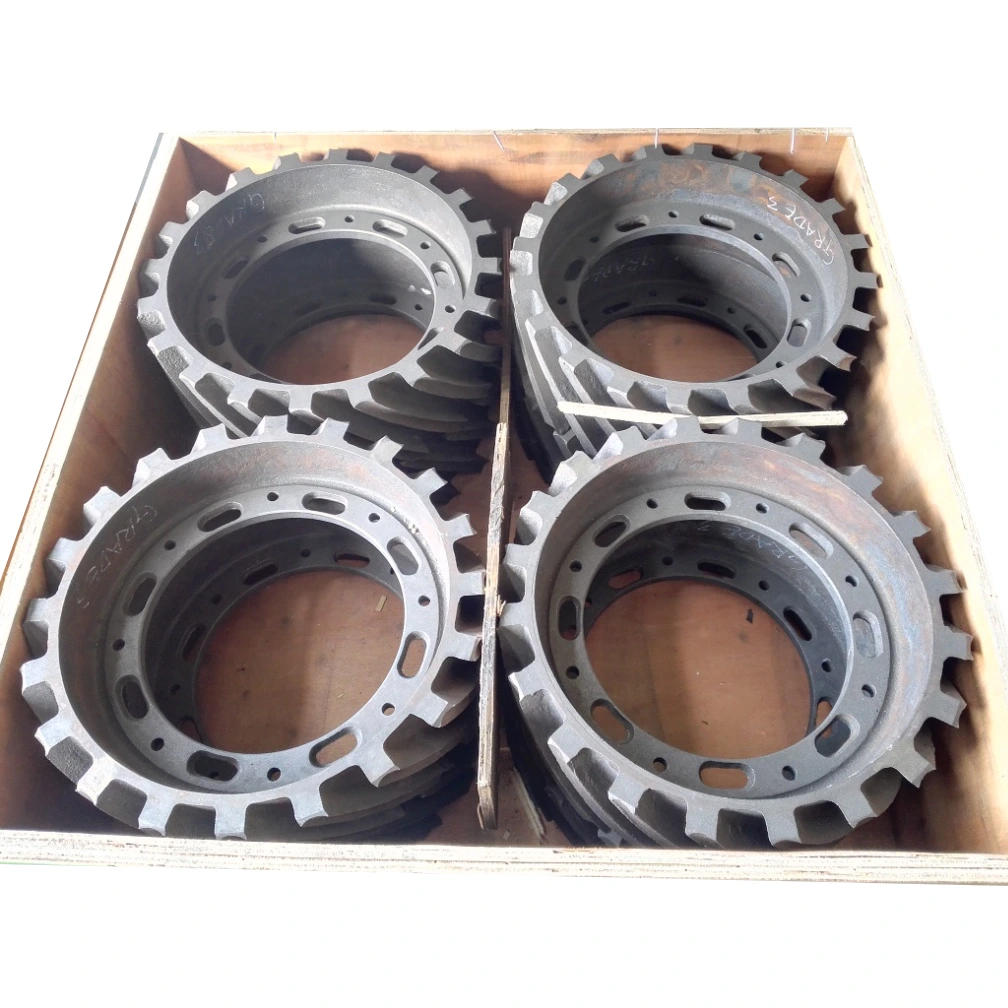
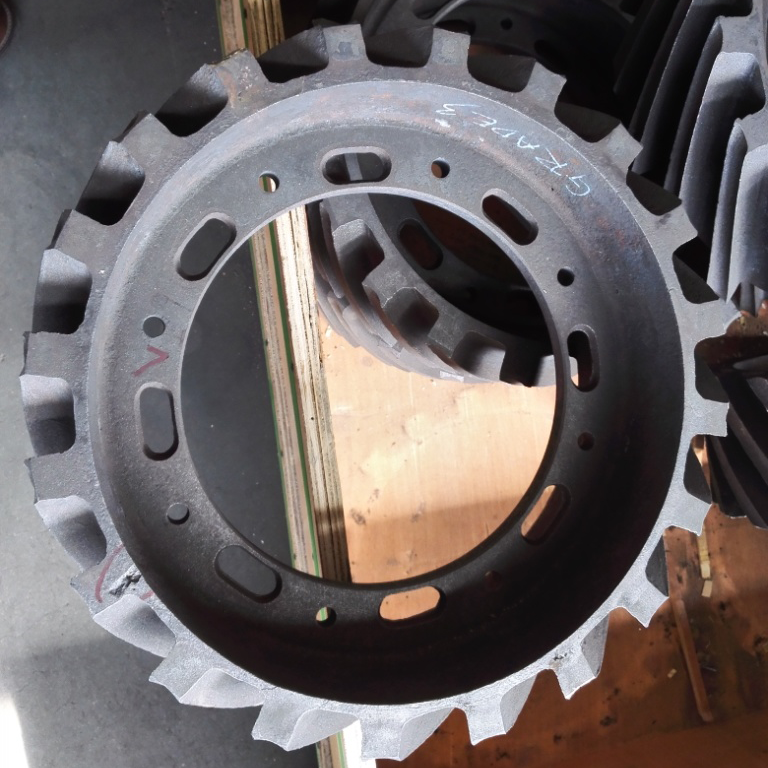

| Property | Grade 130/90/09 | Grade 150/110/07 | Grade 175/125/04 | Grade 200/155/02 | Grade 230/185/01 |
|---|---|---|---|---|---|
| Tensile strength, min, ksi | 130 | 150 | 175 | 200 | 230 |
| Yield strength, min, ksi | 90 | 110 | 125 | 155 | 185 |
| Elongation in 2 in., min, % | 9 | 7 | 4 | 2 | 1 |
| Impact energy, ft-lb
Ato the cap A-th power
𝐴 |
75 | 60 | 45 | 25 | 15 |
| Typical hardness, HBW, kg/mm² | 269–341 | 302–375 | 341–444 | 388–477 | 402–512 |

Unnotched charpy bars tested at 72 ± 7°F. The values in the table are a minimum for the average of the highest three test values of the four tested samples.
| Property | Grade 900/650/09 | Grade 1050/750/07 | Grade 1200/850/04 | Grade 1400/1100/02 | Grade 1600/1300/01 |
|---|---|---|---|---|---|
| Tensile strength, min, MPa | 900 | 1050 | 1200 | 1400 | 1600 |
| Yield strength, min, MPa | 650 | 750 | 850 | 1100 | 1300 |
| Elongation in 50 mm, min, % | 9 | 7 | 4 | 2 | 1 |
| Impact energy, J
Ato the cap A-th power
𝐴 |
100 | 80 | 60 | 35 | 20 |
| Typical hardness, HBW, kg/mm² | 269–341 | 302–375 | 341–444 | 388–477 | 402–512 |
𝐴
Unnotched charpy bars tested at 22 ± 4°C. The values in the table are a minimum for the average of the highest three test values of the four tested samples.
| Manufacturing Method | Sand Casting(Resin Sand, Pre-Coated Sand, Clay Sand, Water glass sand, Green Sand,lost foam ) |
| Material Standard | GB, ANSI, BS, DIN, JIS, ASTM, ASME, AISI, etc carbon steel, low carbon steel, middle carbon steel, G35, G45, WCB, WCA, WCC, ISO 340-550, etc. Alloy Carbon steel: G25CrMo4, Heat Resistant Steel, etc. Stainless Steel: SUS 304, 304L, 316, 316L, CF8, CF8M, G-X7CrNiNb1189, etc. AS2074 or according to customer specific requirement. Ductile Iron:A536-Gr.60-40-18,GGG40,GGG50,FCD40,FCD50,Gr370-17,Gr420-12,etc Grey Iron:A48-No.20,25,30,GG10,GG15,GG20,FC10,FC15,FC20,Grade 150,180,220,FGL150,FGL200,FGL250,etc |
| Weight Range | 1 kg to 100 Tons |
| General Casting Tolerance | CT8-CT12 |
| Design Software | UG, Pro-E, Inventor |
| Dwg Format | STP, STEP, IGS,STP,X_T ,DXF,DWG , Pro/E, PDF, SLDPRT |
| Mould Manufacturing | Yes |
| Casting Stimulation | Yes |
| Ultimate machining tolerance | 0.005mm |
| Quality Control | RT,UT,MT,PT,CMM,SCAN,Chemical and Mechanical Property Testing,Spectrometer,etc |
| Finish Roughness | Ra12.5-Ra25 according to customer requirement |
| Logo/ID | Silk-screening, Laser Marking, Engrave,Painting |
| Heat Treatment | Normalization, Annealing, Quenching and Tempering, Case Hardening, Nitriding, Carbon Nitriding, Induction Quenching,etc |
| Surface Treatment | Shot/sand blast, Polishing, Surface Passivation, Painting , Anodizing,Powder coating, ED- Coating, Chrome Plating, zinc-plate, Dacromat coating, Finish Painting,hot-dip galvanizing, etc |

Common FAQs About Leesh Sand Casting
