
AISI 4140 Forged Alloy Steel for High-Strength Shafts, Rings & Blanks
Custom open-die & closed-die forgings | Quenched & tempered | ISO 9001:2015 | Leesh Holdings
AISI 4140 forged alloy steel is a chromium-molybdenum (Cr-Mo) alloy steel delivered as open-die or closed-die forgings and normally supplied quenched and tempered, built for buyers who need high-strength shafts, rings and blanks for oil & gas, wind power and heavy equipment. Equivalent to DIN 42CrMo4 and JIS SCM440 (UNS G41400, ASTM A29/A29M), it combines tensile strength above 1,020 MPa with dependable toughness after heat treatment. Leesh Holdings forges each piece to drawing, inspects every heat lot, and ships with EN 10204 3.1 material certificates.
Technical Specifications
AISI 4140 forged alloy steel is normally supplied at 28–34 HRC with tensile strength above 1,020 MPa, in pieces from 20 to 1,500 kg, at ISO 8062 CT10–CT12 as-forged tolerance. Every forging is made to customer drawing; the values below are our standard production window for this grade rather than a generic catalogue range, and can be tightened by agreement before the forging drawing is released.
| Parameter | Specification |
|---|---|
| Material grade | AISI 4140 / UNS G41400 / DIN 42CrMo4 / JIS SCM440 |
| Applicable standard | ASTM A29/A29M, EN 10083-3, JIS G4105 |
| Forming process | Open-die forging + closed-die forging, reduction ratio ≥ 3:1 |
| Heat treatment | 850 °C oil quench + 540–680 °C temper (Q&T) |
| Weight range | 20–1,500 kg per piece |
| Size range | OD 50–1,200 mm; length up to 3,000 mm |
| As-forged tolerance | ISO 8062 CT10–CT12 |
| Machined tolerance | ISO 2768-mK; critical dimensions ±0.05 mm |
| Hardness (Q&T) | Typical 28–34 HRC; adjustable 22–42 HRC |
| Tensile strength | ≥ 1,020 MPa in quenched and tempered condition |
| MOQ / lead time | 1 piece for samples; 15–25 days after drawing approval |
| Certification | ISO 9001:2015; EN 10204 3.1 material certificate |
Forging & Heat Treatment Process
A 4140 forging is defined by its eight-step thermal route: billet verification, controlled heating, forging, cooling, quenching and tempering, CNC finishing, inspection and packing. We run that chain in-house so quenching and tempering results stay repeatable from the first piece to the hundredth.
| Step | Stage | What we do |
|---|---|---|
| 01 | Billet verification | Spectrometer check of Cr 0.80–1.10% and Mo 0.15–0.25%, then cut to calculated forging weight. |
| 02 | Controlled heating | Gas furnace at 1,150–1,200 °C with thermocouple logging; soaking time set by section thickness. |
| 03 | Forging | Open-die upsetting and drawing out, or closed-die near-net-shape forming with controlled draft. |
| 04 | Post-forge cooling | Controlled cooling or isothermal annealing to prevent hydrogen flakes in large sections. |
| 05 | Quench & temper | Oil quench from 850 °C, temper 540–680 °C to the hardness agreed on your drawing. |
| 06 | CNC finishing | Turning and milling to ISO 2768-mK; critical bores held to ±0.05 mm on CMM-verified fixtures. |
| 07 | Inspection | 100% ultrasonic per ASTM A388, MT where specified, tensile/impact per ASTM A370 per heat lot. |
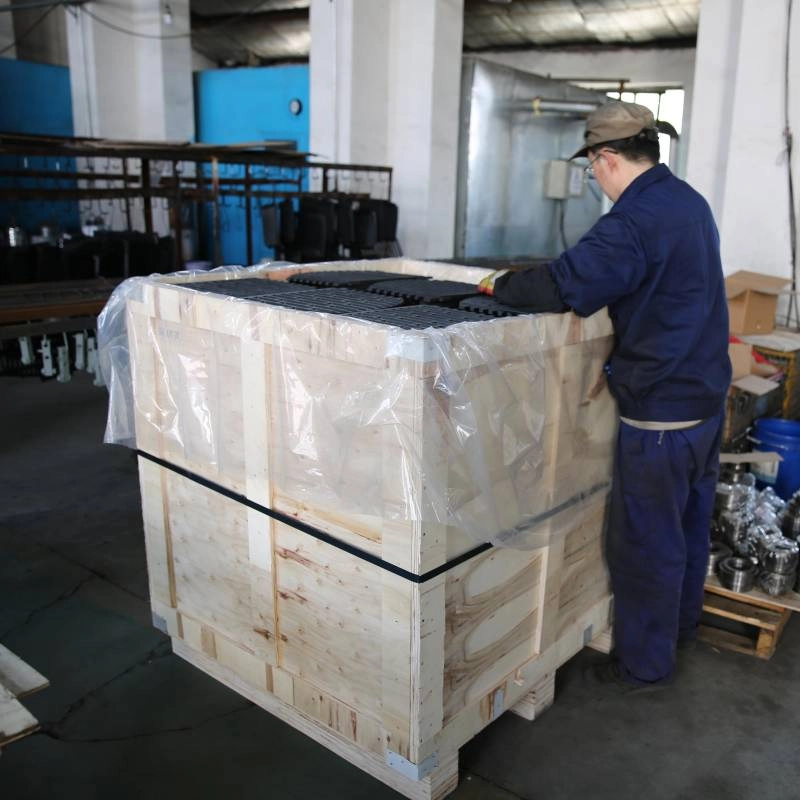
| 08 | Packing | Anti-rust oil + VCI film, then fumigated export wooden cases with heat-treatment stamp. |
Product Gallery
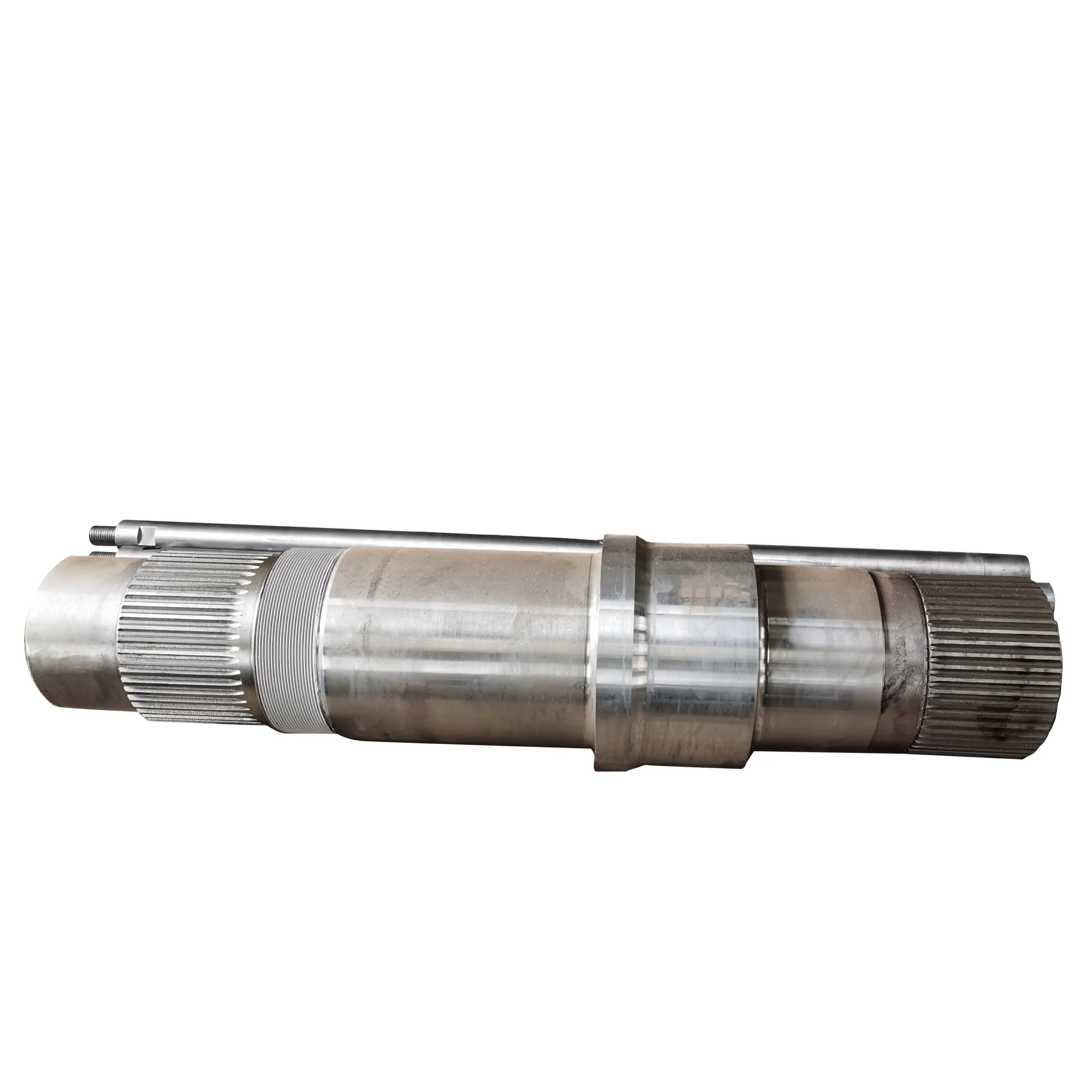
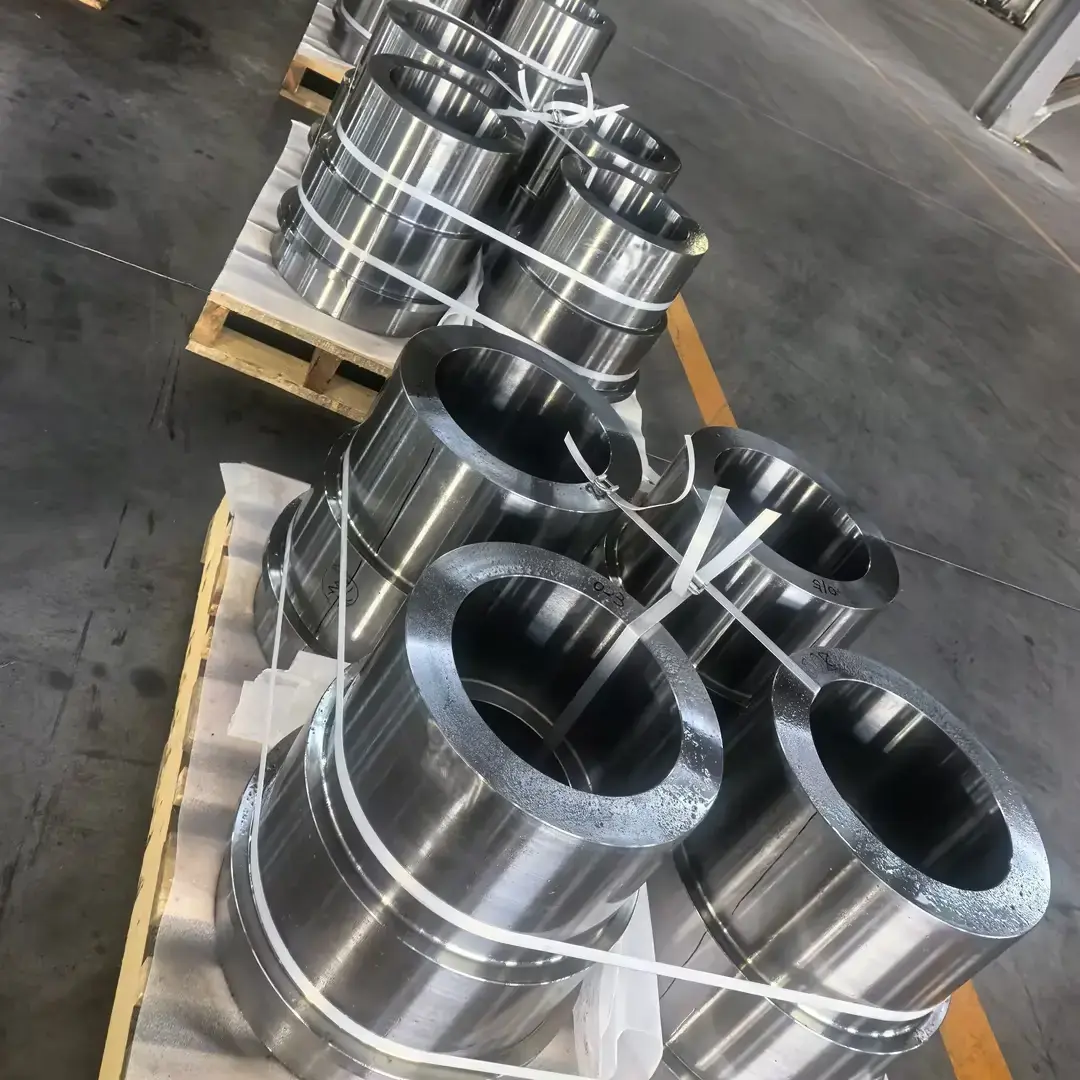
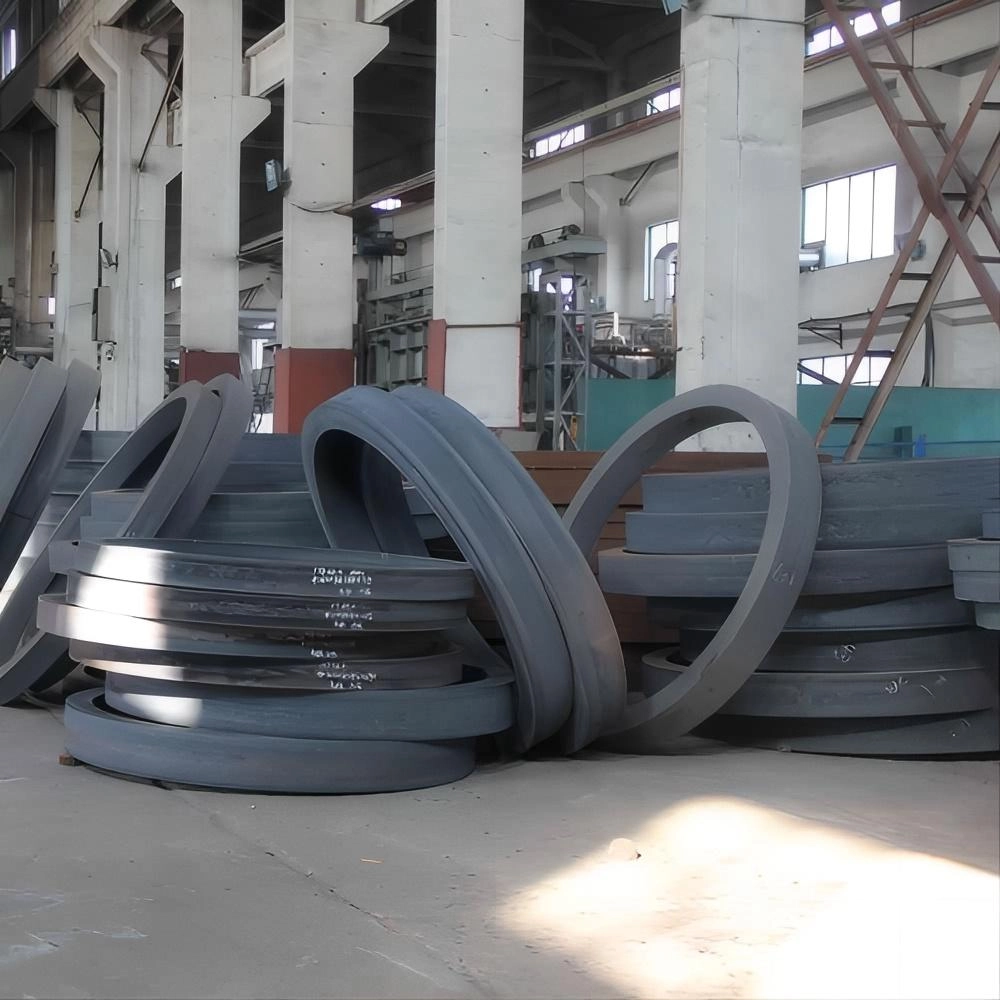
These three views show a finished 4140 shaft, a near-net-shape ring blank and a rough forged billet — the three most requested starting forms for this grade. Replace the image URLs below with final WebP files under 200 KB each; keep the 4:3 ratio.
Application Scenarios
AISI 4140 forged alloy steel is specified across six service classes — oil & gas, wind power, automotive, hydraulics, die and mold, and heavy equipment — with hardness from 28 to 34 HRC in most orders. Target hardness and inspection level are agreed per application rather than applied from one blanket specification.
| Industry | Typical parts | Why 4140 and what we control |
|---|---|---|
| Oil & gas | Drill collars, tool joints, valve bodies | 28–32 HRC for toughness; full-length UT and traceable heat-lot chemistry. |
| Wind power | Main shafts, rotor locking pins | Large section forged with reduction ratio ≥ 3:1; UT acceptance level II. |
| Automotive | Crankshafts, gears, axle shafts | High fatigue strength; grain flow followed the part contour in closed-die tooling. |
| Hydraulics | Cylinder rods, piston rods | Ra 3.2–6.3 µm machined surface ready for hard chrome plating. |
| Die & mold | Die blanks, holder blocks | Good machinability at 28–32 HRC with minimal movement after rough machining. |
| Heavy equipment | Pins, bushings, linking rods | Wear-resistant surface, tough core; induction hardening available on request. |
Leesh Holdings Manufacturing Capability
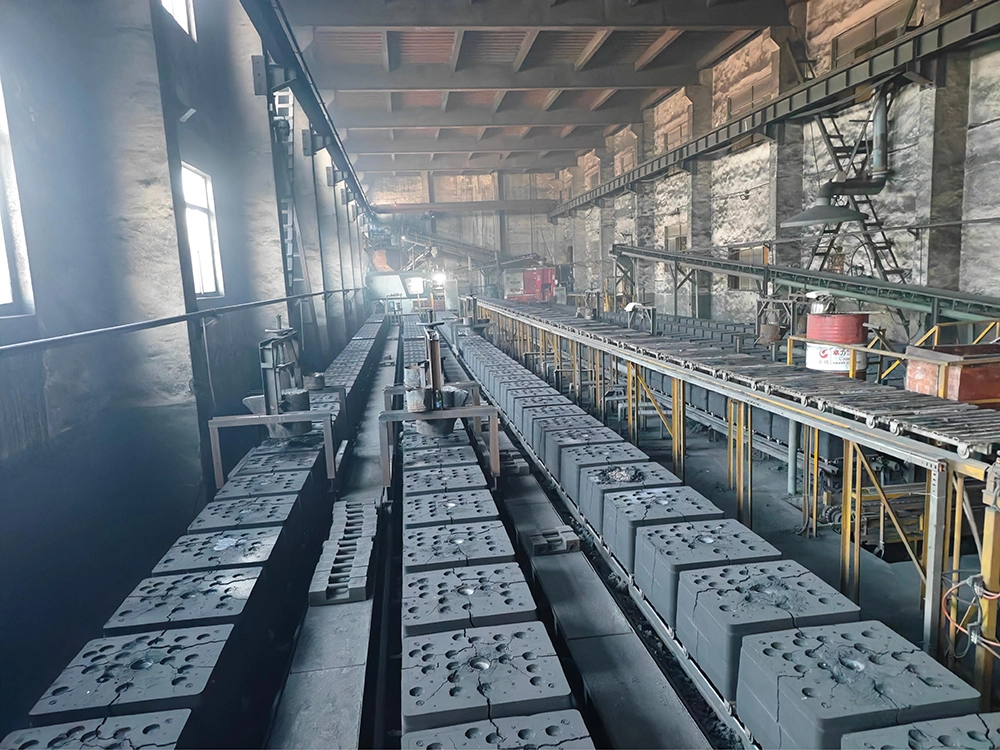
Leesh Holdings keeps melting, sand casting, open-die forging, heat treatment and CNC machining under one roof, so a 4140 order never leaves a single quality system between steps. This matters when one assembly needs both a cast housing and a forged shaft — chemistry, inspection language and packing stay aligned from day one.
Leesh Holdings runs melting, sand casting, open-die forging, heat treatment and CNC machining in one plant, so a 4140 order never leaves our quality system between steps. That matters when a buyer needs both a cast housing and a forged shaft from the same assembly: chemistry, inspection language and packing are aligned from day one. Our forged alloy steel shaft line shares the same furnaces and UT bay described on this page.
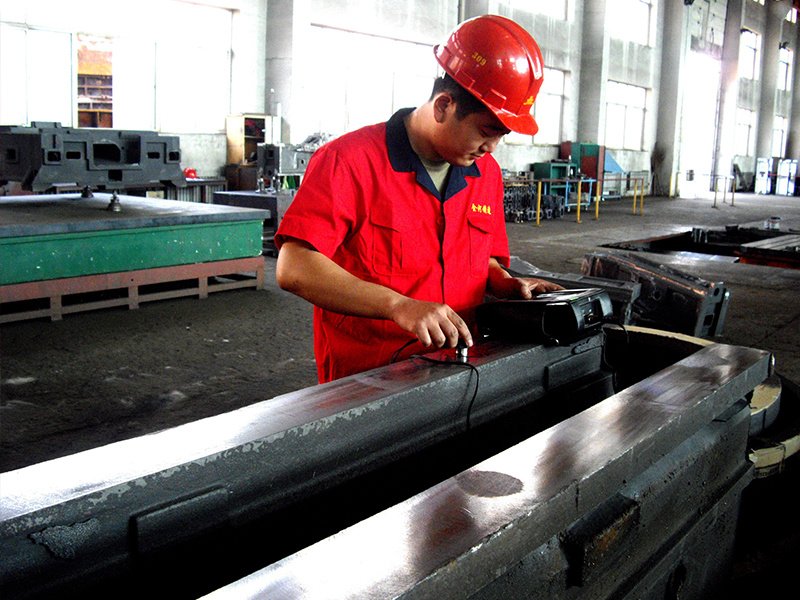
Below are six real workshop views — forging press, heat-treatment furnace, machining centre, inspection bay, sand moulding line and export packing area. Replace with final factory photography before publishing.


Frequently Asked Questions
The five questions below cover the points buyers confirm before placing an AISI 4140 forged alloy steel order: hardness, grade equivalents, MOQ and lead time, inspection, and near-net-shape options. Each answer opens with the direct conclusion.
What hardness can AISI 4140 forgings be supplied to?
Typically 28–34 HRC in the quenched and tempered condition, with a workable range from 22 to 42 HRC by shifting tempering temperature. Leesh Holdings supplies hardness maps and tensile reports for every heat lot. Tell us your target mechanical properties and we will set the tempering cycle before the batch is forged.
Is AISI 4140 the same as 42CrMo4 or SCM440?
They are close equivalents, not identical grades. AISI 4140 (UNS G41400, ASTM A29) roughly matches DIN 42CrMo4 and JIS SCM440 in chemistry, but strict buyers should confirm the exact specification and test standard. We can supply to ASTM A29, EN 10083-3 or JIS G4105 with EN 10204 3.1 certificates.
What is the minimum order quantity and lead time?
One piece is enough for a sample forging; production orders normally start at 50 pieces. Lead time is 15–25 days after drawing approval and covers forging, heat treatment and rough machining. Urgent oil & gas repair parts can be fast-tracked. Send your drawing and annual volume to our quotation team for a firm schedule.
How are 4140 forgings inspected before shipment?
Every heat lot gets chemistry, tensile and impact testing per ASTM A370, plus hardness checks. Each forging receives 100% ultrasonic testing to ASTM A388 and magnetic particle inspection where specified. Dimensional reports from CMM are issued for machined surfaces. Third-party inspection by SGS or BV can be arranged at cost.
Can you forge near-net-shape blanks to cut machining cost?
Yes. Closed-die forging produces near-net-shape 4140 blanks with controlled draft and machining allowance, typically reducing raw material waste by 15–30% versus open-die blanks. We review your finished-part drawing and propose a forging drawing with parting line and allowances before the price is fixed.
Need a quotation for AISI 4140 forged alloy steel?
Send your drawing, grade equivalent and annual volume — we return a forging drawing, tolerance plan and price.
