
Combine Harvester Knife Guard – OEM Sand Cast Ductile Iron Finger Guard Made to Drawing
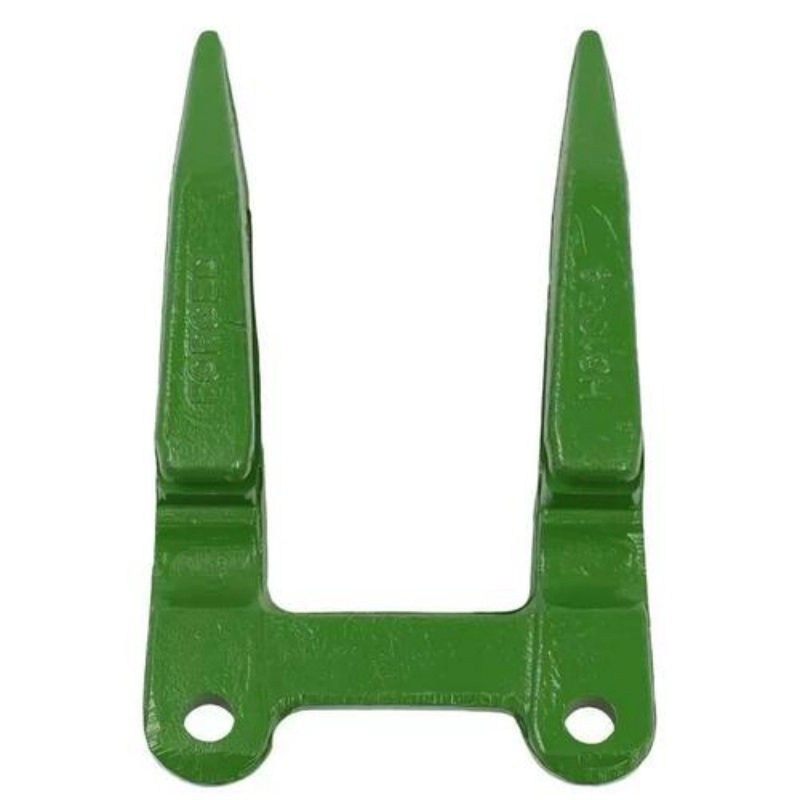
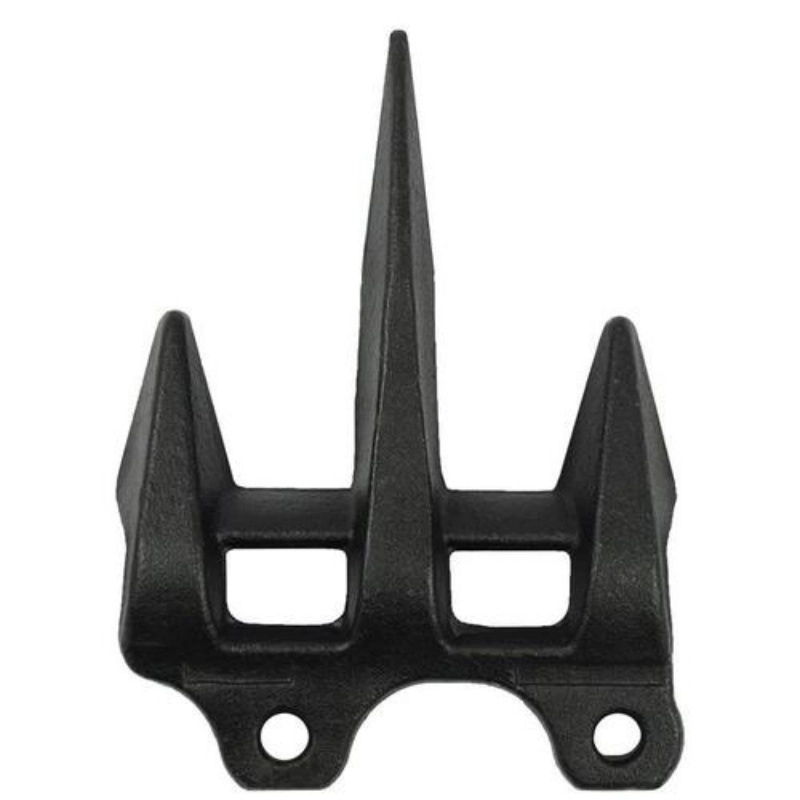
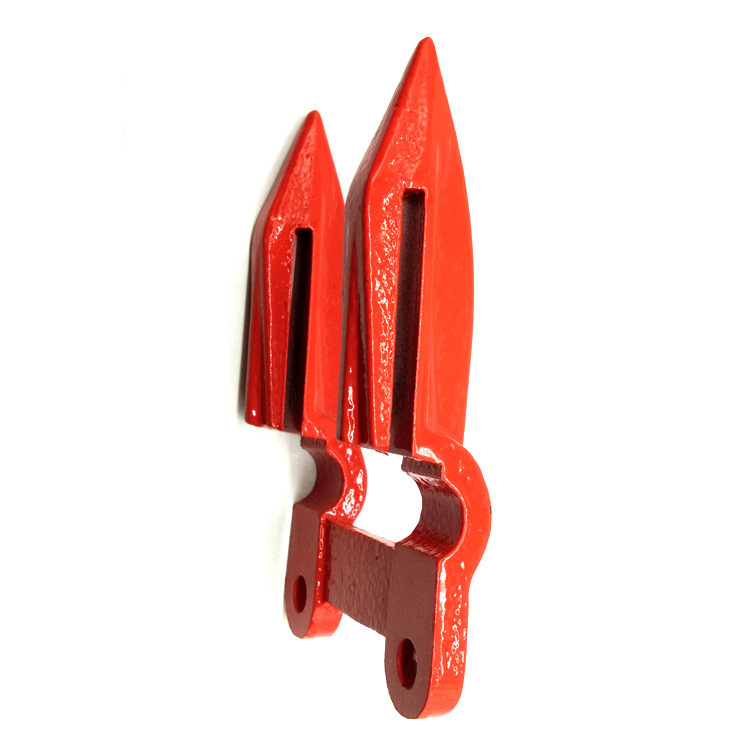
A Combine Harvester Knife Guard is a cast finger fitted to a combine header cutterbar to part the standing crop and shield the sickle sections, and we sand cast it to EN-GJS-500-7 (European), ASTM A536 80-55-06 (US) and AS/NZS 1832 500-7 (Australian) ductile iron, or to a steel grade, entirely customized to your drawing. As an OEM foundry we make single, double and triplicate guards in any pitch and hole pattern your cutterbar calls for — there is no fixed standard size. Leesh Holdings casts, cleans and inspects every finger in-house, with a golden sample retained for repeatability.
Technical Specifications
Cast knife guards are supplied in ductile iron to EN-GJS-500-7 / ASTM A536 80-55-06 / AS/NZS 1832 500-7 with ≥500 MPa tensile strength, in single, double and triplicate models at 0.3–2.5 kg per piece and ISO 8062 CT8–CT10. Because every guard is customized, the values below describe our production capability rather than a fixed catalogue part — pitch, length and hole spacing are all made to your drawing.
| Parameter | Specification | Note |
|---|---|---|
| Material | Ductile iron EN-GJS-500-7 (EN 1563) / ASTM A536 80-55-06 / AS/NZS 1832 500-7 | Steel grade finger guards can also be cast |
| Models | Single (simple) guard, double guard, triplicate guard | Any pitch / hole pattern per drawing |
| Tensile strength | ≥500 MPa | Test bar cast with each heat |
| Yield / elongation | ≥320 MPa proof; ≥7% elongation | Resists tip chipping in stony ground |
| Hardness | 170–230 HB | As-cast or annealed condition |
| Overall length | Made to drawing; typical 95–165 mm | Pattern follows your sample or CAD file |
| Weight | 0.3–2.5 kg per piece; typical 0.8 kg | Light enough for high-speed cutterbars |
| Casting tolerance | ISO 8062 CT8–CT10 | Mounting-hole position ±0.20 mm |
| Surface | Ra 12.5–25 µm as cast, shot blasted Sa2.5 | No sharp edges left on the finger tip |
| Surface treatment | Anti-rust primer; zinc plating or Dacromet optional | 200–480 h salt spray by coating |
| MOQ / samples | 500 pcs per pattern; 20 pcs for fit-up samples | Sample fee credited on production order |
| Lead time | 25–30 days after sample approval | Pattern tooling approx. 15 days |
Guard Models We Cast
We cast three guard configurations — single (simple) guard, double guard and triplicate guards — and every one is made to the customer’s drawing rather than to a stock size.
Double guard — two fingers sharing one mounting foot, used where crop density calls for extra splitting at the same station.
Triplicate guards — three fingers on one body for high-throughput headers; where the bar layout allows, this cuts the number of mounting points and assembly time.
Custom geometry — finger length, spacing between fingers, hole diameter and hole pattern are all produced to your CAD file or physical sample. Private-brand and OEM tooling is made exclusively for your part number.
Sand Casting Process
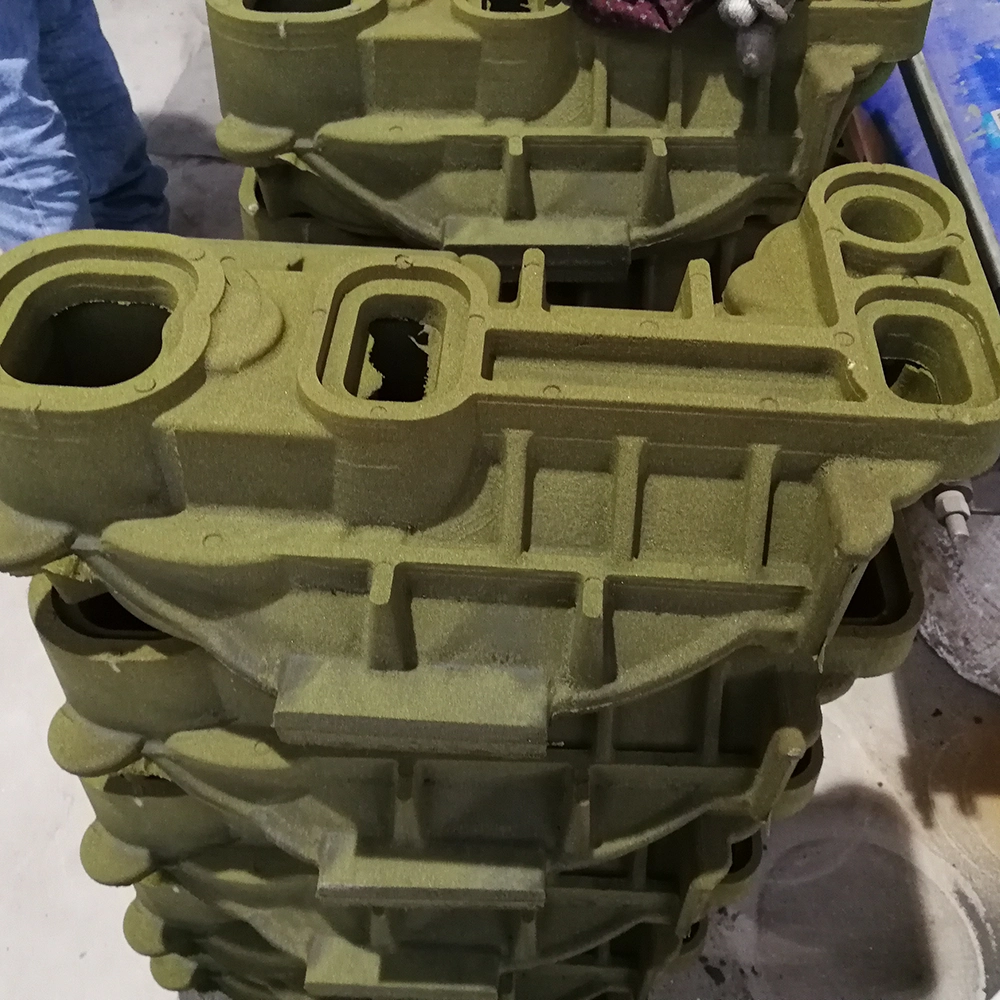
Every cast knife guard is produced by resin-bonded sand casting: a pattern carrying the exact finger profile, cope-and-drag moulds in silica sand, induction melting at 1450–1500 °C, ladle spheroidising, gravity pouring, shakeout, shot blasting and fixture-drilled mounting holes. The sand casting process suits this part especially well: the pattern is comparatively inexpensive for seasonal spare parts, the method accepts both ductile iron and steel grades, and it handles the thin finger tips and thicker mounting foot in one piece without joins. We run the whole chain in-house, so hole position and finger profile stay identical from the first sample to a 50,000-piece season order.
| Step | Process | Control point |
|---|---|---|
| 01 | Pattern and core box made in wood or resin, with 1.0–1.2% shrink allowance | Profile copied from your sample |
| 02 | Silica sand mixed with 3–4% resin binder | Sand temperature 25–30 °C |
| 03 | Cope-and-drag moulding; cores form the recesses between fingers | Mould hardness 80–90 units |
| 04 | Ductile iron or steel grade melted in induction furnace at 1450–1500 °C | Spectrometer check before tap |
| 05 | Ladle spheroidising for ductile iron, then gravity pouring into the sand mould | Pour within 8 min of mould closing |
| 06 | Vibratory shakeout after 30–60 minutes cooling | Sand reclaimed for reuse |
| 07 | Gate removal, grinding and shot blasting to Sa2.5 | Finger tip deburred by hand |
| 08 | Drill and tap mounting holes on a fixture; mill the cutterbar seating face | Hole position ±0.20 mm |
| 09 | Anneal at 900–950 °C where extra machinability is required | Hardness rechecked after treatment |
| 10 | Golden-sample gauge check, coating and final packing | 100% visual inspection |
Applications & Header Compatibility
Ductile iron and steel grade knife guards are fitted to cutterbars on John Deere, Case IH, New Holland, CLAAS, Kubota and LOVOL headers for wheat, rice, corn, soybean and rapeseed harvest. Each crop class puts a different load on the finger tip, so we agree material grade, hardness and coating against your header drawing rather than shipping one universal guard.
| Crop / header | Typical machines | Function / load |
|---|---|---|
| Wheat & barley | John Deere, Case IH cutterbars | Crop division and sickle protection at 6–8 km/h |
| Rice | Kubota, Yanmar header guards | Wet-field crop guidance, anti-rust primer required |
| Corn / maize | CLAAS, New Holland headers | Stalk separation; higher tip impact load |
| Soybean | LOVOL, Zoomlion header guards | Low-cut pickup close to the ground |
| Rapeseed / canola | Custom-spacing cutterbars | Lodged crop recovery, slim finger profile |
| Forage / chopper | OEM sickle guard style bars | Feed guidance ahead of the chopper drum |
Quality Control & Inspection
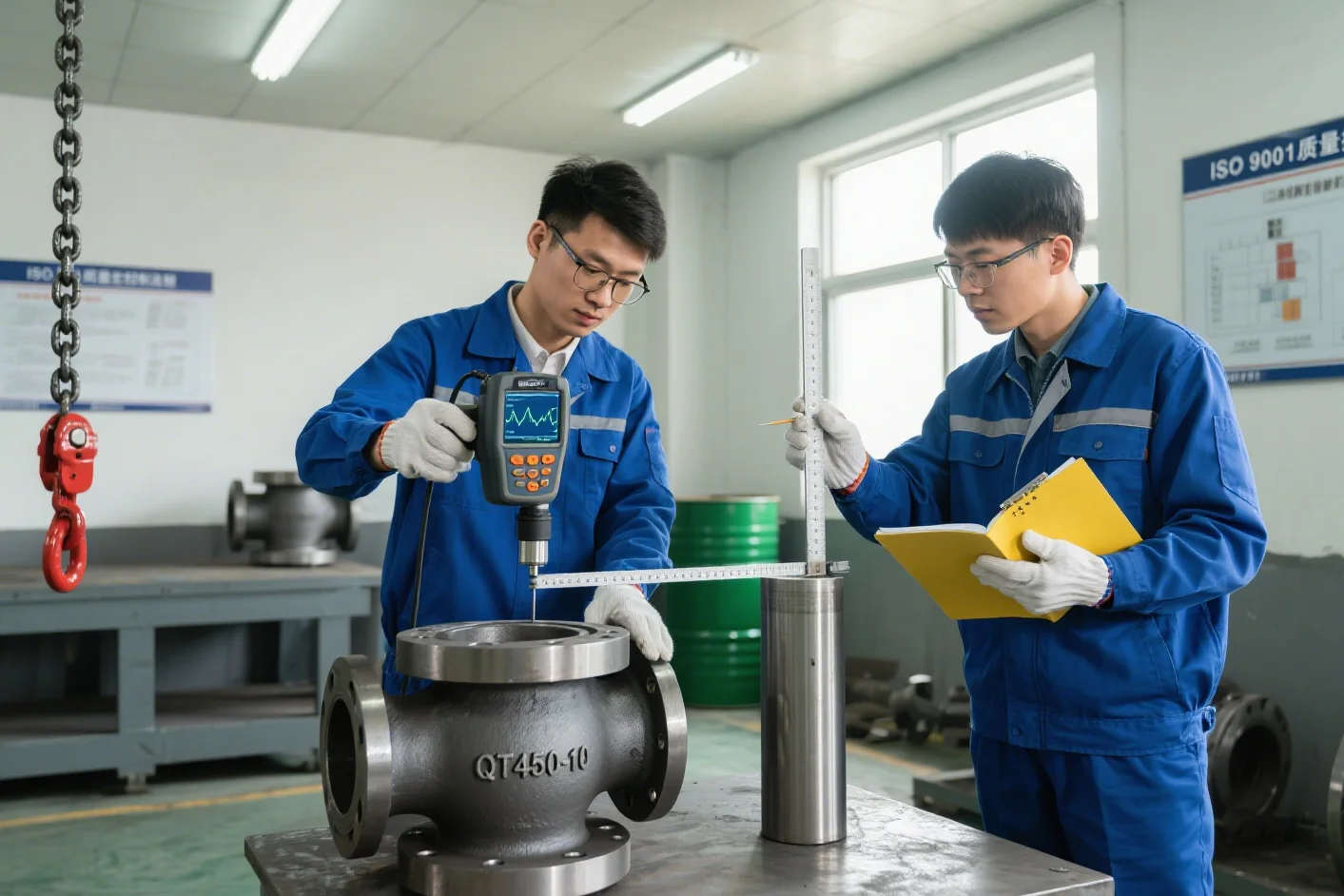
Every production batch is checked against a retained golden sample with a dedicated hole-position gauge, plus a spectrometer heat check, tensile bar and hardness reading before packing. This matters on a cast knife guard because a 0.5 mm drift in hole position will stop the whole cutterbar assembly line.
Mechanical — tensile bar ≥500 MPa, elongation ≥7%, hardness 170–230 HB.
Dimensional — dedicated hole-position gauge, CMM on first article, compared with your drawing.
Profile — finger geometry checked against golden sample under a shadow graph.
Coating — salt-spray test report available for plated orders.
Visual — 100% check for flash, shrinkage and sharp edges.
OEM Manufacturing & Foundry Capability
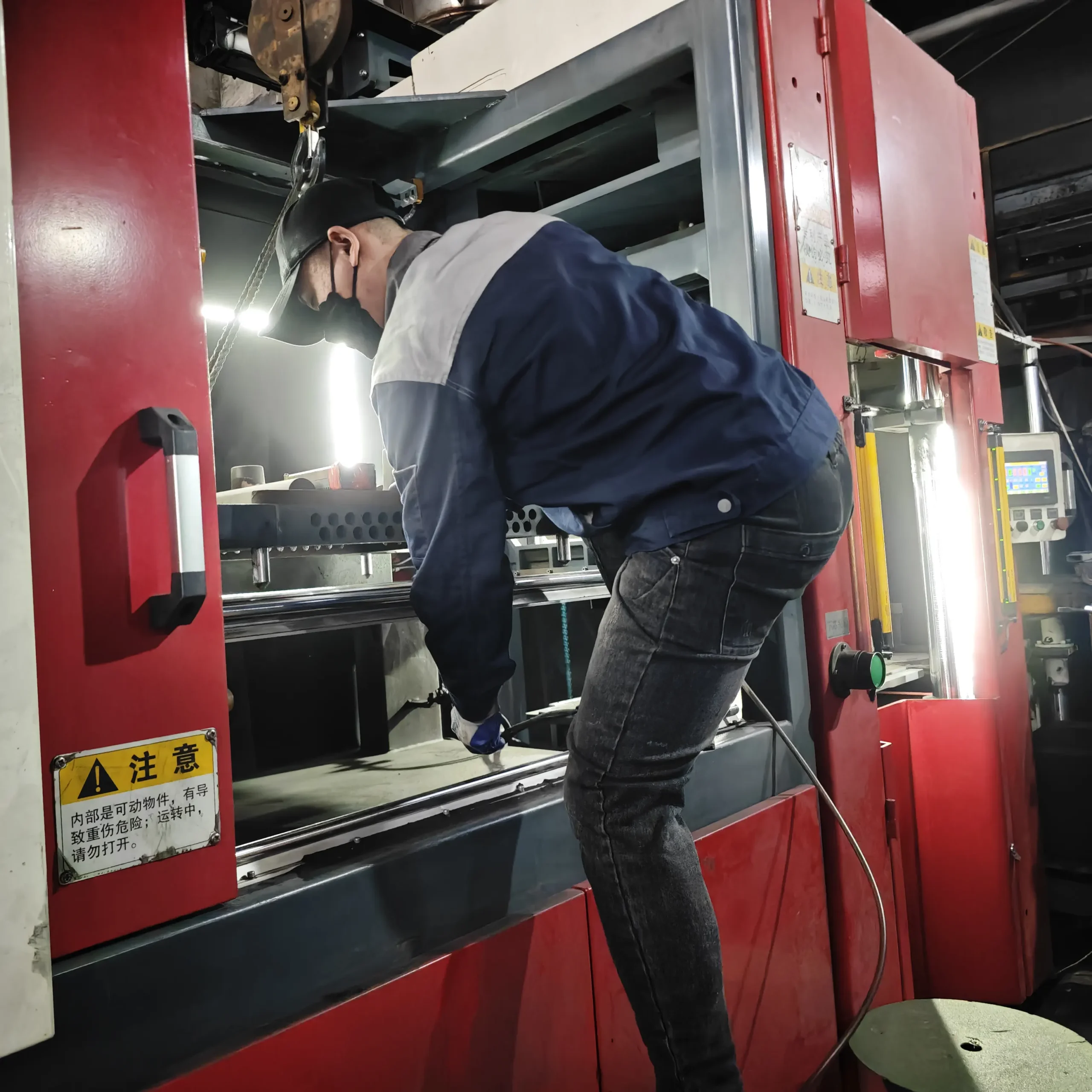
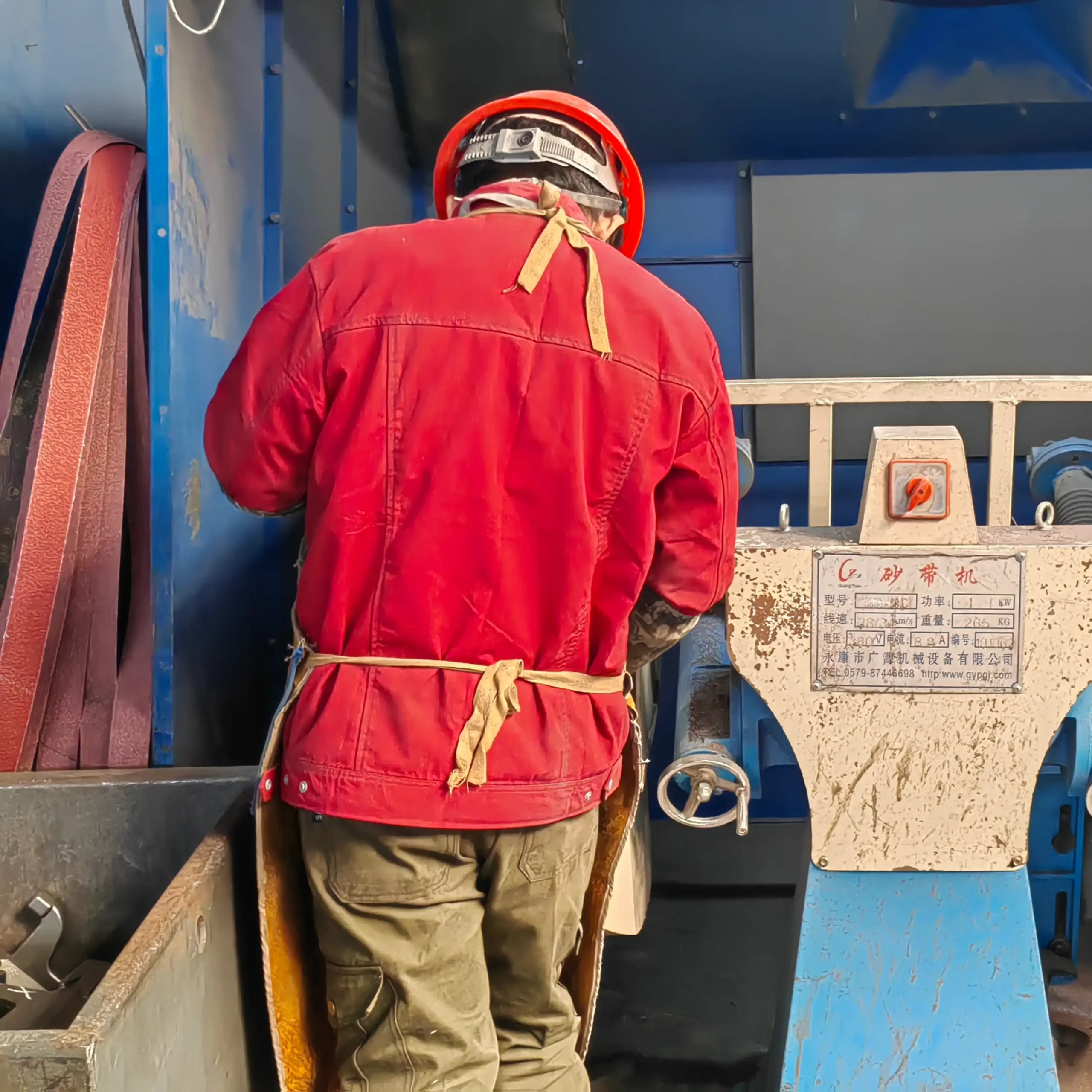
Leesh Holdings is an OEM foundry: all knife guards are customized made per drawing or sample, with in-house pattern making, resin-sand moulding, induction melting and shot blasting supporting 25–30 day delivery on repeat orders. We hold patterns exclusively for returning customers, so a re-order does not restart tooling. More on our ductile iron and steel sand casting capability and the grades we pour.


Packaging & Logistics
Every knife guard is carefully packed in small, clearly labelled cartons with anti-rust protection, so your warehouse team can store and identify each batch at a glance. Each guard is treated against rust and sealed before boxing, and every small carton is marked with the part number, pattern reference and quantity — stock goes straight onto your shelves without opening every box. Cartons are then consolidated into sturdy outer packing built to arrive clean and undamaged through long-distance haulage, cross-ocean sea freight and air freight.
Frequently Asked Questions
Buyers most often ask which international material grades we cast, whether steel guards are available, which models we make, and how an OEM order is handled from drawing to repeat production — the direct answers are below.
Which material grades do your combine harvester knife guards meet?
Our standard guard is sand cast in ductile iron to EN-GJS-500-7 (European EN 1563), ASTM A536 80-55-06 (US) and AS/NZS 1832 500-7 (Australian), with ≥500 MPa tensile strength and ≥7% elongation. Steel grade finger guards can also be produced to the same drawing when your specification calls for steel.
What guard models can you make?
We cast single (simple) guards, double guards and triplicate guards. Finger count, spacing, overall length and hole pattern are all made per drawing — we do not work from a fixed catalogue size. Send a used guard or CAD file and we will reverse the profile, build a pattern and supply fit-up samples for approval.
Are you an OEM supplier for header spare parts?
Yes. We are an OEM foundry and every knife guard is customized made per drawing or physical sample, including private-brand part numbers and packaging. Tooling is made exclusively for your part, and we retain the pattern and a golden sample so repeat seasons reproduce the same fit without re-cutting a mould.
What is the MOQ and lead time?
Production MOQ is 500 pieces per pattern, with 20-piece fit-up samples supplied first; the sample fee is credited against your production order. Pattern tooling takes about 15 days and production delivery is 25–30 days after sample approval. Seasonal repeat orders are faster because we retain the tooling.
How do you hold hole position across a long order?
Mounting holes are drilled and tapped on a fixture after casting, with position held to ±0.20 mm and verified by a dedicated gauge against the golden sample. First articles are measured by CMM, and every heat is checked by spectrometer, tensile bar and hardness test before the batch is released.
Need an OEM quote for a cast knife guard?
Send your drawing or a used sample for a free fitment review.