
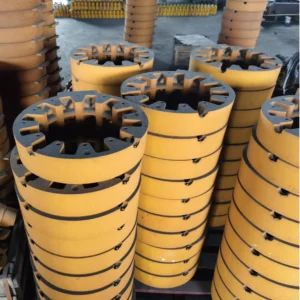
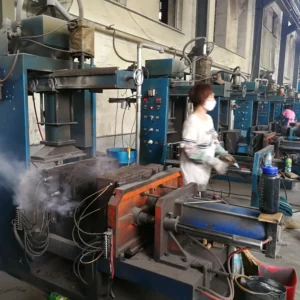
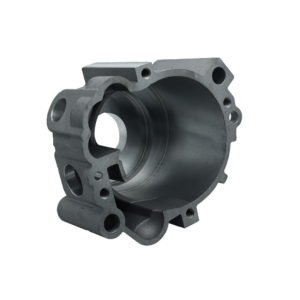
| Manufacturing Method | Sand Casting(Resin Sand, Pre-Coated Sand, Clay Sand, Water glass sand, Green Sand,lost foam ) |
| Material Standard | GB, ANSI, BS, DIN, JIS, ASTM, ASME, AISI, etc carbon steel, low carbon steel, middle carbon steel, G35, G45, WCB, WCA, WCC, ISO 340-550, etc. Alloy Carbon steel: G25CrMo4, Heat Resistant Steel, etc. Stainless Steel: SUS 304, 304L, 316, 316L, CF8, CF8M, G-X7CrNiNb1189, etc. AS2074 or according to customer specific requirement. Ductile Iron:A536-Gr.60-40-18,GGG40,GGG50,FCD40,FCD50,Gr370-17,Gr420-12,etc Grey Iron:A48-No.20,25,30,GG10,GG15,GG20,FC10,FC15,FC20,Grade 150,180,220,FGL150,FGL200,FGL250,etc |
| Weight Range | 1 kg to 100 Tons |
| General Casting Tolerance | CT8-CT12 |
| Design Software | UG, Pro-E, Inventor |
| Dwg Format | STP, STEP, IGS,STP,X_T ,DXF,DWG , Pro/E, PDF, SLDPRT |
| Mould Manufacturing | Yes |
| Casting Stimulation | Yes |
| Ultimate machining tolerance | 0.005mm |
| Quality Control | RT,UT,MT,PT,CMM,SCAN,Chemical and Mechanical Property Testing,Spectrometer,etc |
| Finish Roughness | Ra12.5-Ra25 according to customer requirement |
| Logo/ID | Silk-screening, Laser Marking, Engrave,Painting |
| Heat Treatment | Normalization, Annealing, Quenching and Tempering, Case Hardening, Nitriding, Carbon Nitriding, Induction Quenching,etc |
| Surface Treatment | Shot/sand blast, Polishing, Surface Passivation, Painting , Anodizing,Powder coating, ED- Coating, Chrome Plating, zinc-plate, Dacromat coating, Finish Painting,hot-dip galvanizing, etc |

FAQ: Common Questions About Our Wear-Resistant Bushings
Q1: How does Cr2021 High-Chromium Iron compare to standard Manganese Steel for bushings? While Manganese steel relies on work-hardening (impact) to become hard, our Cr2021 High-Chromium cast iron possesses intrinsic hardness right out of the box. With a hardness greater than 58 HRC, our wear-resistant bushing offers superior performance in low-impact, high-abrasion environments where standard manganese steel would wear out too quickly.
Q2: What is the expected service life of these sand-cast bushings? Service life depends on the specific operating conditions, but generally, high-chrome alloy bushings can outlast standard carbon steel or low-alloy alternatives by 2 to 3 times. The specialized heat treatment process ensures the carbide structure resists sliding abrasion, significantly reducing maintenance frequency and equipment downtime.
Q3: Can the material hardness be customized beyond 58 HRC? Yes. We understand that extreme applications require extreme solutions. While our standard specification is >58 HRC, we can adjust the chemical composition and heat treatment cycles to enhance the hardness or modify the toughness according to your specific user needs. Please contact our engineering team with your technical drawings.
Q4: Is the sand casting method reliable for high-precision applications? Absolutely. We utilize advanced sand casting techniques combined with rigorous post-casting machining. This allows us to produce wear-resistant bushings with complex shapes and excellent internal structural integrity, free from significant porosity. All parts undergo dimensional inspection to ensure they fit your machinery perfectly.
