
Stainless Steel Rod Clevis – Investment Cast 304 & 316 Clevis Made to Drawing
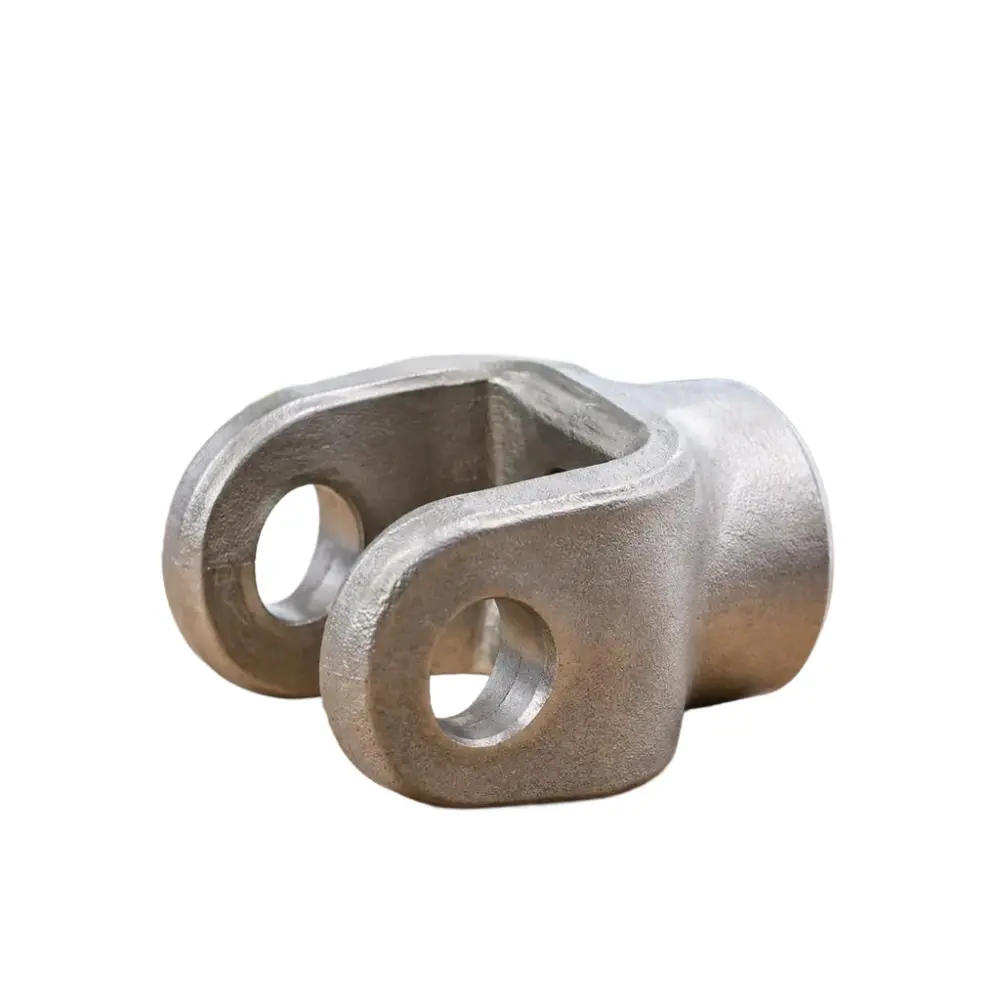
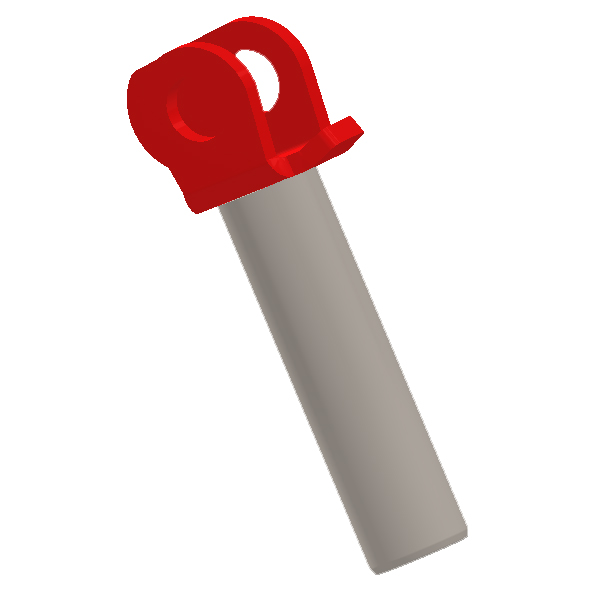
A stainless steel rod clevis is a U-shaped fork connector with a pin hole and a threaded shank that joins a tie rod to a lever on farm and industrial machinery, and we investment cast it in AISI 304 / CF8 and 316 / CF8M stainless steel, then machine the pin bore and thread to your drawing. As an investment casting foundry we make clevises from 0.05 to 5 kg with ISO 8062 CT4–CT6 as-cast tolerance, in male, female, jaw and plain patterns — there is no fixed catalogue size. Leesh Holdings wax-injects, shells, pours, machines and inspects every clevis in-house under an ISO 9001 quality system, with a golden sample retained for repeatability.
Leesh Holdings is a professional foundry running both lost-wax investment casting for stainless, carbon and alloy steels from 0.01 to 80 kg and resin sand casting for iron and steel parts from 0.5 to 800 kg — a rod clevis is one product line among hundreds we pour, not our only output. The same in-house wax shop, shell line, induction furnaces and CNC cells also serve clients in agriculture, material handling, marine and general industry. Learn more on our investment casting service and sand casting service pages.
Technical Specifications
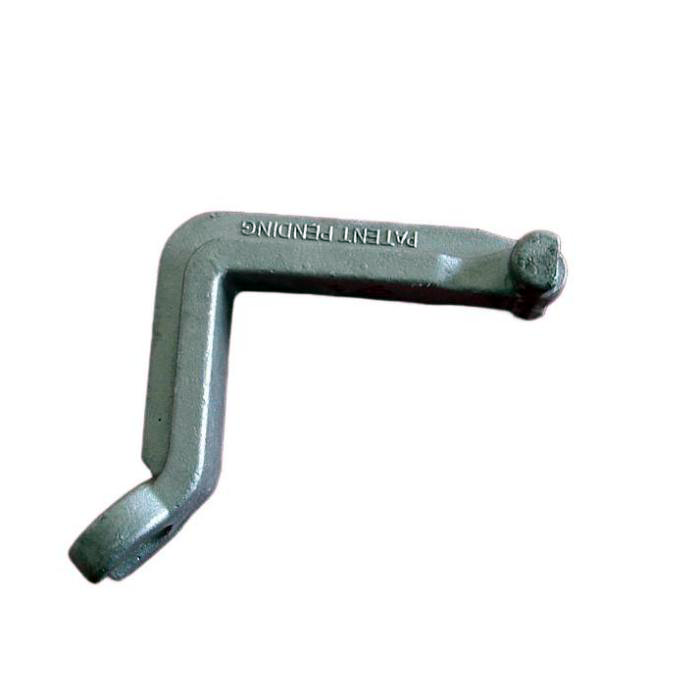
Our stainless steel rod clevises are cast from 0.05 to 5 kg with pin bores from 6 to 40 mm, male or female threads from M8 to M36, and ISO 8062 CT4–CT6 as-cast tolerance with machined features held to ±0.10 mm. Every clevis is made to the customer’s drawing, so the figures below describe our production capability rather than a fixed catalogue part — jaw width, pin diameter, thread and shank length all follow your sample or CAD file.
| Parameter | Specification | Note |
|---|---|---|
| Material | AISI 304 / CF8 (EN 1.4308), 316 / CF8M (EN 1.4408) | Duplex 2205 and 17-4PH available |
| Casting process | Lost-wax investment casting, silica-sol shell | ISO 8062 CT4–CT6 as cast |
| Weight range | 0.05–5 kg per piece | Larger clevises to 80 kg on request |
| Pin bore | 6–40 mm, machined H9 / to drawing | Reamed or broached in-house |
| Thread | M8–M36 male or female; UNF/UNC on request | Class 6H / 6g held |
| Jaw configuration | Male, female, jaw, plain and custom clevis | Jaw gap and pin centres per drawing |
| Machined tolerance | ±0.10 mm on bores and threads | CMM checked on first article |
| Surface finish | Ra 3.2–6.3 µm as cast, Ra 1.6 machined | Bead blast or electropolish optional |
| Heat treatment | Solution annealed 1050–1100 °C, water quench | For 304 / 316 austenitic grades |
| MOQ / samples | 100 pcs per pattern; 5 pcs samples | Sample fee credited on production order |
| Lead time | 25–30 days after sample approval | Wax tooling approx. 12 days |
Stainless Steel Grades We Cast
AISI 304 / CF8 and 316 / CF8M are our standard stainless grades for rod clevises — 316 adds about 2–3% molybdenum for pitting resistance in marine and fertiliser service, while duplex 2205 roughly doubles the yield strength of 304 at around 450 MPa. We melt under a controlled chemistry and check every heat by optical emission spectrometer before pouring, so the grade named on your drawing is the grade you receive. Investment cast stainless clevis parts can be supplied solution annealed, passivated and machined to your pin and thread specification.
AISI 316 / CF8M (EN 1.4408) — 2–3% Mo for chloride and marine environments; the most requested grade for export agricultural equipment.
Duplex 2205 (EN 1.4462) — about 450 MPa yield, roughly twice 304, for high-strength tie rods and weight-critical linkages.
17-4PH (EN 1.4542) — precipitation-hardening grade up to 1,000 MPa after H900, for high-load clevis pins and aerospace-type linkages.
Custom grade — chemistry, grade and hardness are set to your drawing or OEM specification, with a spectrometer heat check on every melt.
Investment Casting & Machining Process
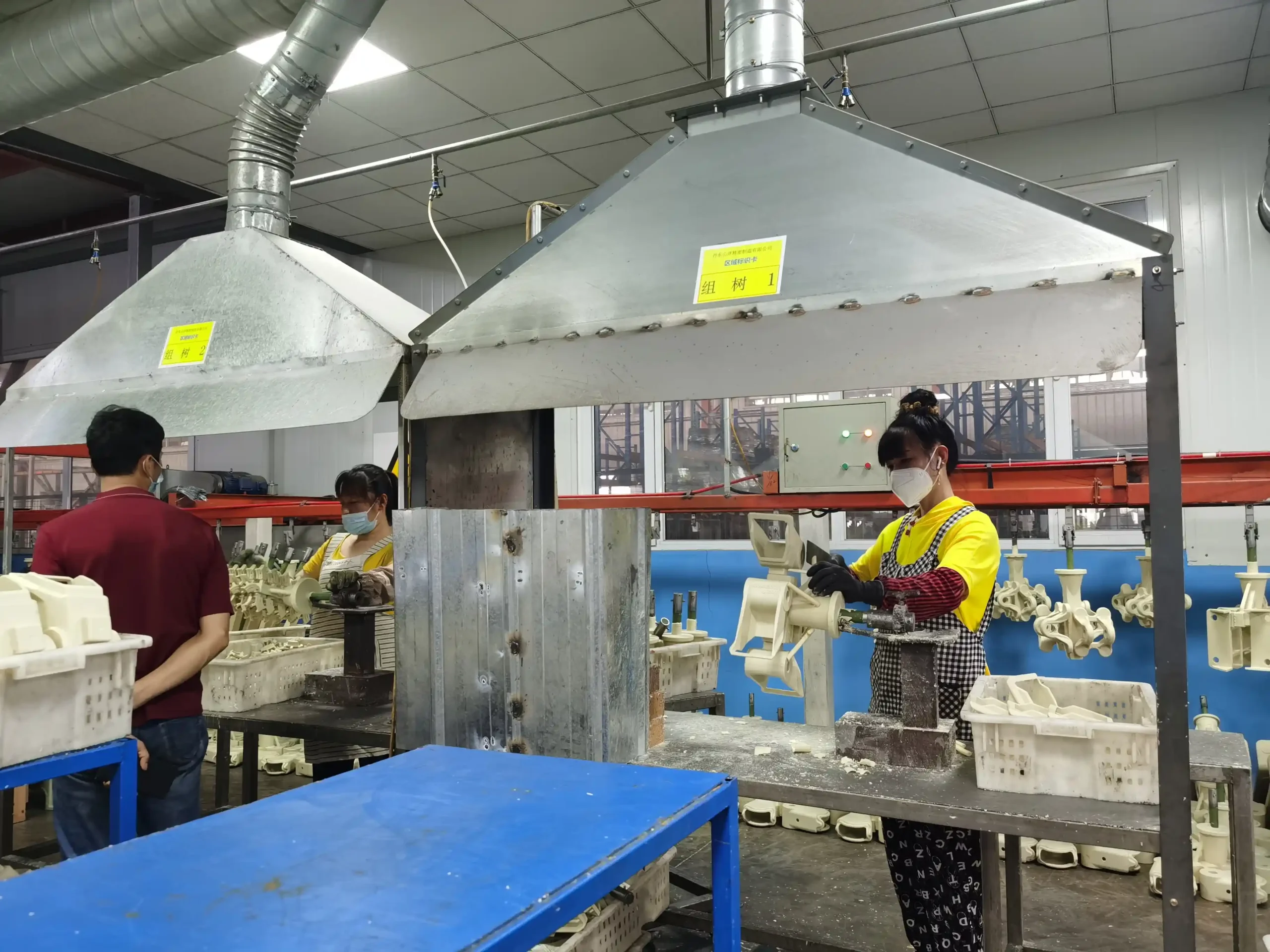
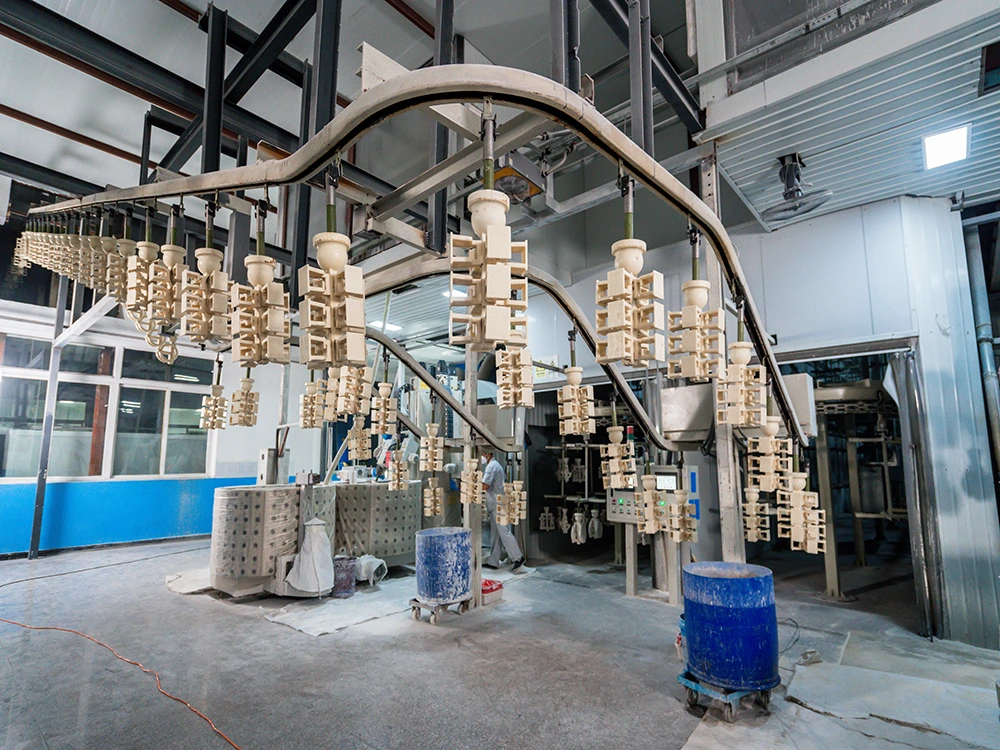
Every stainless steel rod clevis is produced by lost-wax investment casting: wax injection into an aluminium die, tree assembly, silica-sol ceramic shell, dewaxing, pouring at 1500–1580 °C, shell knockout, cut-off, solution annealing, then CNC machining of the pin bore and thread. The investment casting process suits a rod clevis particularly well: it captures the curved fork and shank in one piece without parting lines, holds CT4–CT6 detail on small features, and works the same for 304, 316 and duplex grades. We run wax, shell, melting and machining in-house, so pin-bore fit and thread class stay identical from the first sample to a full production order.
| Step | Process | Control point |
|---|---|---|
| 01 | Aluminium wax die made from your CAD or sample, with shrink allowance | Jaw geometry copied from your part |
| 02 | Wax pattern injected and assembled onto a sprue tree | Wax temperature 45–55 °C |
| 03 | Silica-sol ceramic shell built in 6–8 dip and stucco coats | Shell thickness 6–8 mm |
| 04 | Dewax in autoclave, then shell fired at 1000–1100 °C | No wax residue in cavity |
| 05 | Stainless steel melted in induction furnace and poured at 1500–1580 °C | Spectrometer check before pour |
| 06 | Shell knockout and sprue cut-off after cooling | Gates ground flush on fork |
| 07 | Solution anneal at 1050–1100 °C and water quench | Hardness rechecked after treatment |
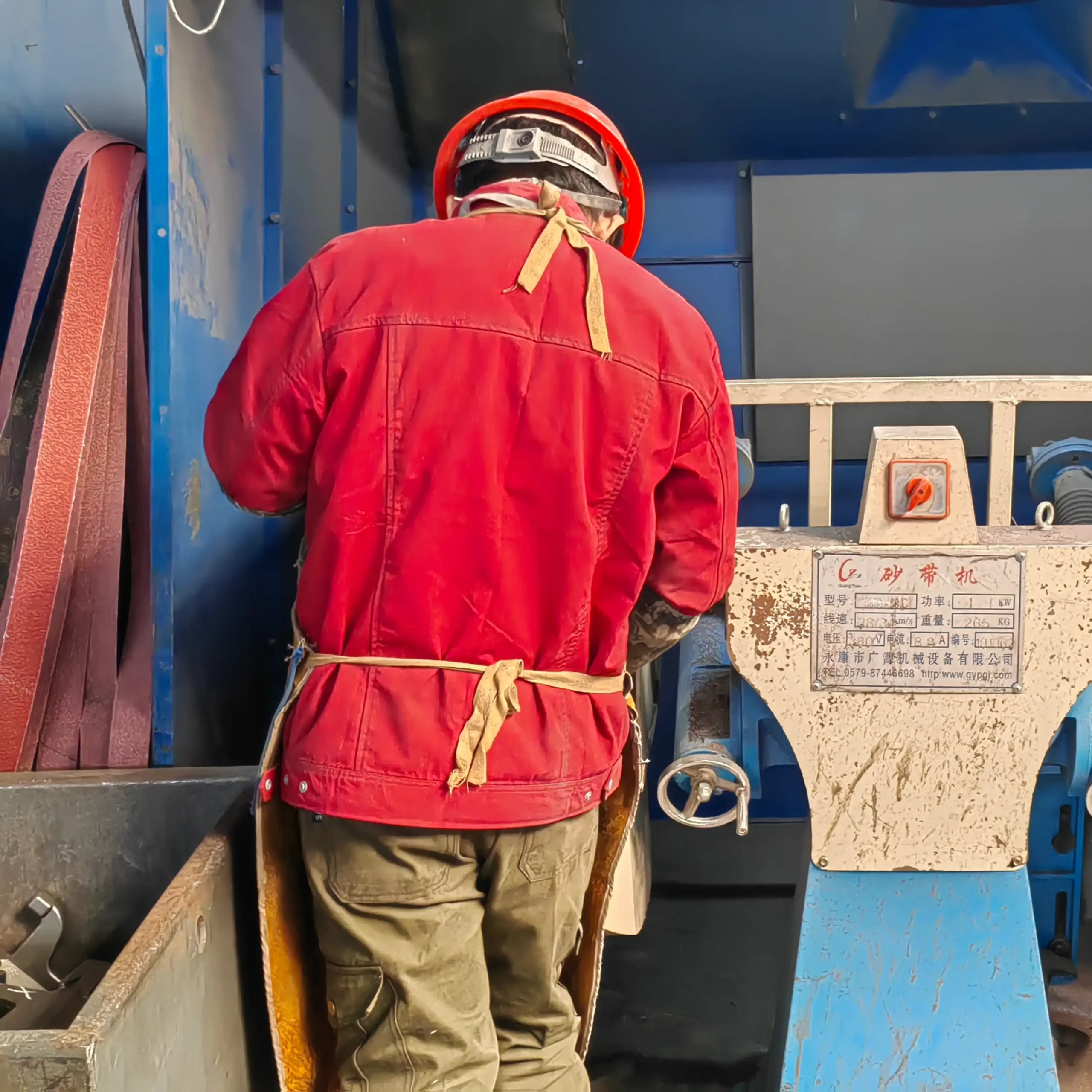
| 08 | CNC machine the pin bore and thread on a fixture | Bore H9, thread 6H/6g |
| 09 | Bead blast, passivate and deburr the jaw edges | Ra 1.6 on machined faces |
| 10 | Golden-sample gauge check, dimensional report and final packing | 100% visual inspection |
Applications & Machine Compatibility
Stainless steel rod clevises connect tie rods, linkages and hydraulic cylinders on agricultural implements, material-handling equipment, marine gear and industrial machines, with 304 for general use and 316 where salt, fertiliser or washdown corrosion is present. Each application puts a different load and corrosion demand on the fork and pin, so we agree grade, pin diameter and thread class against your assembly drawing rather than shipping one universal clevis.
| Machine / sector | Typical use | Grade / load note |
|---|---|---|
| Agricultural implements | Three-point linkage and planter tie rods | 304; seasonal high-cycle duty |
| Harvesters & balers | Header height and reel drive linkages | 304 / duplex for vibration loads |
| Material handling | Forklift and hoist linkage rods | Duplex 2205 for higher yield |
| Marine & aquaculture | Deck gear and net-handling linkages | 316 for chloride pitting resistance |
| Fertiliser & chemical | Spreader and valve actuator rods | 316 / 2205 for chemical attack |
| Industrial machinery | Hydraulic cylinder rod ends and jigs | 17-4PH where high strength is needed |
Quality Control & Inspection
Every production batch is checked against a retained golden sample with a spectrometer heat analysis, pin-bore gauge, thread gauge, CMM first article and 100% visual inspection before packing. This matters on a cast rod clevis because a 0.1 mm drift in the pin bore or a mismatched thread class will stop the whole linkage assembly line.
Mechanical — tensile and hardness test per heat; 304 ≥205 MPa yield, duplex 2205 ≈450 MPa yield.
Dimensional — CMM on first article, pin-bore H9 gauge and thread go/no-go gauge checked to drawing.
Profile — jaw gap and fork geometry compared with the golden sample under a shadow graph.
Surface — passivation certificate and roughness reading available on request.
Documentation — material certificate, dimensional report and PPAP support available for OEM orders.
About Leesh Holdings – A Professional Casting Foundry
Leesh Holdings runs two in-house casting processes — lost-wax investment casting for stainless, carbon and alloy steels from 0.01 to 80 kg, and resin sand casting for grey iron, ductile iron and steel parts from 0.5 to 800 kg — so a stainless steel rod clevis is one product line inside a full-service foundry, not our only output. On the same site we pour clevises alongside valve bodies, pump impellers, gear blanks and marine hardware for customers in agriculture, material handling, marine and general industry. Every order is custom made to drawing or sample, and we carry it from wax tooling and material selection through shell building, melting, machining and inspection under one roof.
Lost-wax precision casting in stainless, carbon and alloy steels from 0.01 to 80 kg, to ISO 8062 CT4–CT6 with Ra 3.2–6.3 µm as-cast finish. Ideal for clevises, valve parts, impellers and tight-tolerance small components. See our investment casting service.
Grey iron, ductile iron and cast steel from 0.5 to 800 kg; wood and resin patterns, cope-and-drag moulding, induction melting, shakeout, shot blasting and CNC machining. For larger housings, blocks and heavy components. See our sand casting service.
Our Investment Casting Service & Stainless Steel Standards
Our investment casting service covers stainless, carbon and alloy steel parts from 0.01 to 80 kg at ISO 8062 CT4–CT6, backed by in-house wax tooling, silica-sol shell building, induction melting, CNC machining, passivation and 100% inspection for repeat OEM orders. The lost-wax process gives us the freedom to cast a 0.05 kg clevis and an 80 kg pump housing on the same site, and we hold wax dies and golden samples exclusively for returning customers so a re-order never restarts tooling. We work to the standard your drawing names — Chinese GB, American ASTM/AISI, European EN or Japanese JIS — and confirm the exact grade by spectrometer before every pour.
The most common cast stainless grades we pour map across four standards as follows — AISI 304, for example, corresponds to ASTM A351 CF8, EN 1.4308 (GXCrNi19-9) and JIS SCS13. Use this table to translate a grade named on your drawing into the equivalent in another standard; final acceptance is always against the mechanical properties and chemistry on your specification.
| Type | China GB | USA ASTM / AISI | Europe EN | Japan JIS |
|---|---|---|---|---|
| 304 austenitic | 06Cr19Ni10 (304) | A351 CF8 / AISI 304 | 1.4308 (GXCrNi19-9) | SCS13 |
| 316 austenitic | 06Cr17Ni12Mo2 (316) | A351 CF8M / AISI 316 | 1.4408 (GXCrNiMo19-11-2) | SCS14 |
| 304L austenitic | 022Cr19Ni10 (304L) | A351 CF3 / AISI 304L | 1.4308 / 1.4309 | SCS13A |
| Duplex 2205 | 022Cr22Ni5Mo3N | A351 CD3MN / UNS S31803 | 1.4462 | — |
| 17-4PH | 05Cr17Ni4Cu4Nb | A564 17-4PH / UNS S17400 | 1.4542 | — |
Grade pairs are close equivalents by chemistry and mechanical properties, not identical specifications — always confirm the applicable standard, heat-treatment condition and acceptance limits on your drawing. Our metallurgists can recommend the Chinese, American, European or Japanese grade that best matches your clevis.



Packaging & Logistics
Every rod clevis is carefully packed in small, clearly labelled cartons with anti-rust protection and separated machined bores, so your warehouse team can identify each batch at a glance. Each clevis is cleaned, passivated and sealed before boxing, and every carton is marked with the part number, pattern reference and quantity — stock goes straight onto your shelves without opening every box. Cartons are then consolidated into sturdy outer packing built to arrive clean and undamaged through long-distance haulage, cross-ocean sea freight and air freight.
Frequently Asked Questions
Buyers most often ask which stainless grades we cast, what sizes and threads we make, whether we machine in-house, and how an OEM order runs from drawing to repeat production — the direct answers are below.
Which stainless grades do you cast rod clevises in?
Our standard grades are AISI 304 / CF8 (EN 1.4308) and 316 / CF8M (EN 1.4408), with 316 chosen for marine and fertiliser service. Duplex 2205 is available for roughly double the yield strength of 304, and 17-4PH for high-load linkages. Every heat is checked by spectrometer before pouring, and we can match a custom grade to your drawing.
What sizes, pin bores and threads can you make?
We cast clevises from 0.05 to 5 kg with pin bores from 6 to 40 mm and male or female threads from M8 to M36, including UNF/UNC on request. Bores are machined to H9 and threads to 6H/6g. These are capability ranges, not stock sizes — jaw gap, pin centres and shank length are all made to your sample or CAD file.
Do you machine and inspect the clevises in-house?
Yes. After shell knockout and solution annealing we CNC-machine the pin bore and thread on a fixture, then bead blast and passivate. First articles are measured by CMM, and every batch gets a pin-bore gauge, thread gauge and golden-sample profile check. Keeping machining in-house means bore fit and thread class stay consistent across a long order.
Are you an OEM investment casting supplier?
Yes. We are an OEM foundry and every rod clevis is custom made per drawing or physical sample, including your part number and packaging. Wax tooling is made exclusively for your part, and we retain the die and a golden sample so repeat seasons reproduce the same fit without new tooling. Material certificates, dimensional reports and PPAP support are available.
What is the MOQ and lead time?
Production MOQ is 100 pieces per pattern, with five samples supplied first; the sample fee is credited against your production order. Wax tooling takes about 12 days and production delivery is 25–30 days after sample approval. Seasonal repeat orders are faster because we retain the tooling and golden sample.
Need an OEM quote for a stainless steel rod clevis?
Send your drawing or a used clevis for a free fitment review.