Ductile cast iron common inspection method of Leesh
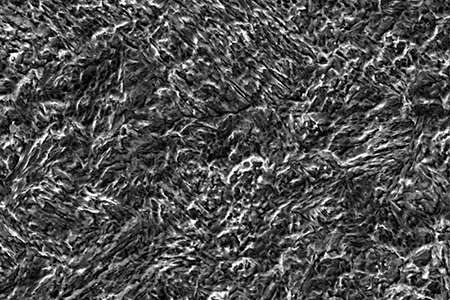
Metallography Inspection
Hardness Inspection
Pressure Testing
Ultrasonic inspection
Ductile cast iron common inspection method of Leesh Read More »
Metallography Inspection
Hardness Inspection
Pressure Testing
Ultrasonic inspection
Ductile cast iron common inspection method of Leesh Read More »
Manual moulding Manual moulding refers to the moulding process of using hand or hand tools to complete the main operations such as place tooling, compact and press sand to tight, remove tooling, place core box and adding gating system. The manual molding operation is flexible, the process equipment such as tooling and core box is
The introduction of manual moulding and machine moulding of sand casting Read More »
Beased on many years casting expericne ,Leesh casting engineer team sharing some knowledge of the Casting Alloy fluidity
1-Concept of alloy fluidity
2-Method of Expressing fluidity
3-Factors affecting fluidity
Casting Alloy fluidity during casting process Read More »
Precision casting, also known as investment casting or lost wax casting, is a manufacturing process that has been used for centuries to create highly detailed and dimensionally accurate metal parts. This method is widely employed in industries such as aerospace, automotive, medical, and jewelry due to its ability to produce complex shapes with excellent surface finishes. In this article, we will explore the precision casting process, materials, applications, and key considerations.
Precision Casting: A Comprehensive Guide to the Process, Materials, and Applications Read More »
C86500 Is a kind of copper alloy material, mainly used in chemical machinery and equipment, with high electrical conductivity, thermal conductivity, corrosion resistance and mechanical strength characteristics. C86500 Copper by adding the right amount of tin, zinc and other elements, significantly improve the corrosion resistance and mechanical strength of the material, so that it can
C86500-Manganese Bronze Read More »
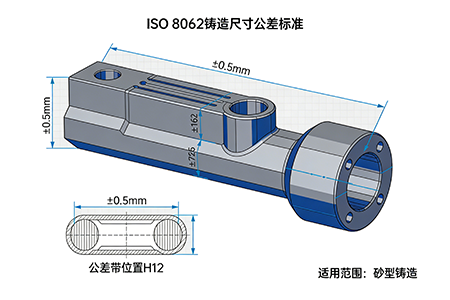
Size ange (mm) CT Category From To 3 4 5 6 7 8 9 10.00 0.18 0.26 0.36 0.52 0.74 1.00 10.00 1.50 16.00 0.20 0.28 0.38 0.54 0.78 1.10 16.00 1.60 25.00 0.22 0.30 0.42 0.58 0.82 1.20 25.00 1.70 40.00 0.24 0.30 0.46 0.64 0.90 1.30 40.00 1.80 63.00 0.26 0.36 0.50 0.70
Casting Tolerance Reference Chart Read More »
1-Smooth surface finish Use the Aluminum mould and wax to make the pattern, then glue with the silica sol as binding agent, so you will see a very clear difference compare with Sand Casting .Mostly the roughness range from Ra 1.6 μm to Ra6.4 μm, but Leesh Engineering Investment Casting service can achieve a average above 3.2μm. 2-Save machining Time and
What is the investment casting advantages? Read More »
Knowing the surface roughness by different manufacturing method- it will let you make the right decision to choose the best suitable method and material, it will let you know the best budget. Process Roughness Range, Ra – Micrometers μm Maximum Minimum Flame Cutting 25 12.5 Snagging 25 6.3 Sawing 25 1.6 Planing, Shaping 12.5 1.6 Drilling 6.3 1.6 Chemical Milling 6.3 1.6 Elect.
Surface Roughness by Different Manufacturing Method Read More »
Country Standard Equivalent Grades of Grey Iron (Gray Cast Iron) ISO ISO 185 100 150 200 250 300 350 – China GB 9439 HT100 HT150 HT200 HT250 HT300 HT350 – USA ASTM A48 – NO.20 NO.30 NO.35 NO.40 NO.50 NO.55 NO.25 NO.45 NO.60 Germany DIN 1691 GG10 GG15 GG20 GG25 GG30 GG35 GG40 Austria European
Equivalent Grades of Grey Iron (Gray Cast Iron) Read More »
High Frequency Induction Quenching is a form of heat treatment in which a metal part, High Frequency Induction Quenching is heated by induction heating and then quenched. The quenched metal undergoes a martensitic transformation, increasing the hardness and brittleness of the part. Induction hardening is used to selectively harden areas of a part or assembly
High Frequency Induction Quenching Read More »