Understanding EN 1564: Ausferritic Spheroidal Graphite Cast Irons (ADI)
The European Standard for Austempered Ductile Iron — and How Leesh Delivers ADI Through Advanced Sand Casting
| Standard: | EN 1564:2012 — Founding — Ausferritic spheroidal graphite cast irons (Under revision: FprEN 1564) |
| Grades: | 5 grades — EN-GJS-800-8 through EN-GJS-1400-1 |
| Equivalent Standards: | ISO 17804, ASTM A897 / A897M |
| Leesh Capability: | All 5 ADI grades via resin sand casting, shell mold casting, and green sand casting |
1. What Is EN 1564?
EN 1564 is the European Standard that defines the grades and corresponding requirements for ausferritic spheroidal graphite cast irons — more commonly known in the industry as Austempered Ductile Iron (ADI). Published by CEN (European Committee for Standardization) and adopted across all EU member states plus the UK (as BS EN 1564), this standard is the definitive reference for specifying, testing, and procuring ADI castings in the European market.
The current edition, EN 1564:2012, specifies five grades classified by mechanical properties measured on machined test pieces.
Why a Separate Standard for ADI?
While general spheroidal graphite cast iron (ductile iron) is covered by EN 1563, ausferritic grades require dedicated treatment because the austempering heat treatment process fundamentally transforms the microstructure from conventional ferrite/pearlite into ausferrite — a unique matrix of acicular (needle-like) ferrite laths embedded in carbon-enriched, thermally stabilized austenite. This microstructure delivers a combination of strength, toughness, and wear resistance that no as-cast or conventionally heat-treated ductile iron can match.
ADI can achieve tensile strengths exceeding 1,400 MPa while maintaining measurable elongation — a performance envelope that puts it in direct competition with forged and heat-treated alloy steels, but at a fraction of the manufacturing cost for complex shapes.
2. EN 1564:2012 — The Five ADI Grades
EN 1564 classifies ausferritic spheroidal graphite cast irons into five grades, each designated by the EN-GJS system where the suffix indicates minimum tensile strength (MPa) and minimum elongation (%). The standard also assigns a numeric material number for each grade.
| Designation (Symbol) | Material Number | Tensile Strength Rm (MPa) min | 0.2% Proof Stress Rp0.2 (MPa) min | Elongation A (%) min | Hardness HBW | Typical Application |
|---|---|---|---|---|---|---|
| EN-GJS-800-8 | EN-JS1100 | 800 | 500 | 8 | 260–320 | High-ductility structural parts, suspension brackets, agricultural machinery |
| EN-GJS-900-8 | EN-JS1110 | 900 | 600 | 8 | 280–340 | Balanced strength-toughness parts, swivel bearings, pivot joints |
| EN-GJS-1000-5 | EN-JS1102 | 1000 | 700 | 5 | 300–360 | Gears, crankshafts, connecting rods, railway components |
| EN-GJS-1200-2 | EN-JS1120 | 1200 | 850 | 2 | 340–420 | High-wear gears, camshafts, heavy-duty sprockets, crusher parts |
| EN-GJS-1400-1 | EN-JS1130 | 1400 | 1100 | 1 | 380–460 | Extreme-wear applications, abrasion plates, mining equipment liners |
3. The Science Behind Ausferritic Cast Iron
The Ausferrite Microstructure
The term "ausferrite" is a portmanteau of austenite and ferrite, describing the distinctive two-phase matrix produced by the austempering heat treatment. Unlike conventional ductile iron — where the matrix consists of ferrite, pearlite, or a mixture of both — ausferritic microstructure comprises:
- Acicular (needle-like) ferrite — Extremely fine ferrite laths that nucleate and grow during isothermal holding at the austempering temperature. These provide exceptional strength.
- Carbon-enriched stabilized austenite — The untransformed austenite between ferrite laths becomes so enriched in carbon that it remains thermally and mechanically stable at room temperature. This phase provides toughness and strain-hardening capacity.
The Austempering Process — Step by Step
- Austenitizing — The ductile iron casting is heated to 850–950 °C and held until the matrix fully transforms to austenite with carbon from the graphite nodules dissolved uniformly.
- Quenching — The part is rapidly quenched in a molten salt bath held at the austempering temperature (typically 250–400 °C). The quench must be fast enough to avoid the "pearlite nose" on the TTT diagram.
- Isothermal Holding — The casting is held at the austempering temperature for a precisely controlled duration. During this stage, ausferrite nucleates and grows. The temperature choice determines the final grade: lower temperatures (250–300 °C) produce higher-strength grades (1200–1400 MPa); higher temperatures (350–400 °C) produce tougher, more ductile grades (800–1000 MPa).
- Cooling to Room Temperature — The part is cooled in still air. No further tempering is required.
4. Leesh Sand Casting for ADI Components
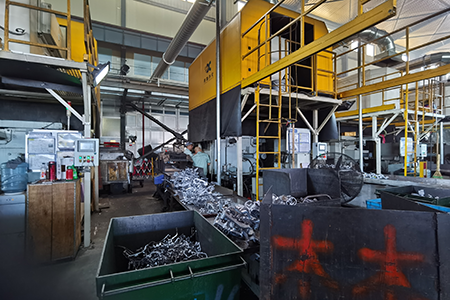
At Leesh Holdings, we produce all five EN 1564 ADI grades through our multi-process sand casting foundry. Our integrated approach — from pattern making and molding through austempering heat treatment and final machining — ensures every ADI casting meets the exact mechanical property requirements of the standard.
Sand Casting Processes for ADI at Leesh
Resin Sand Casting
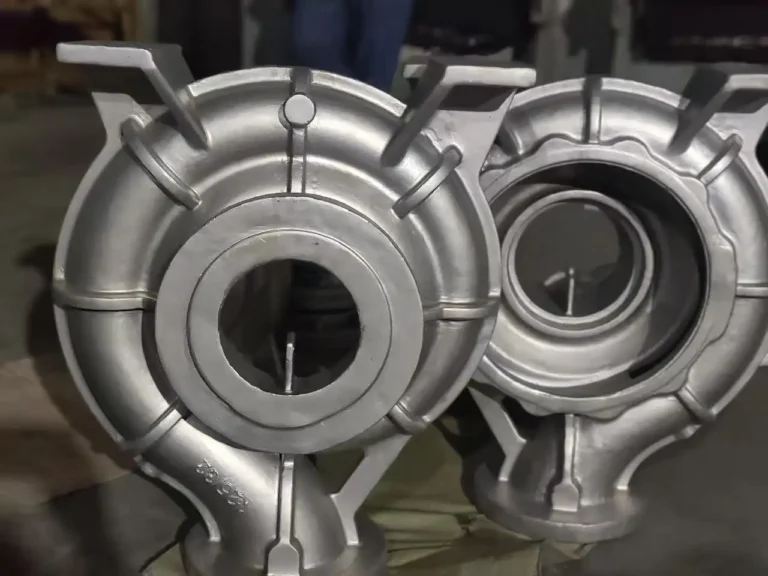
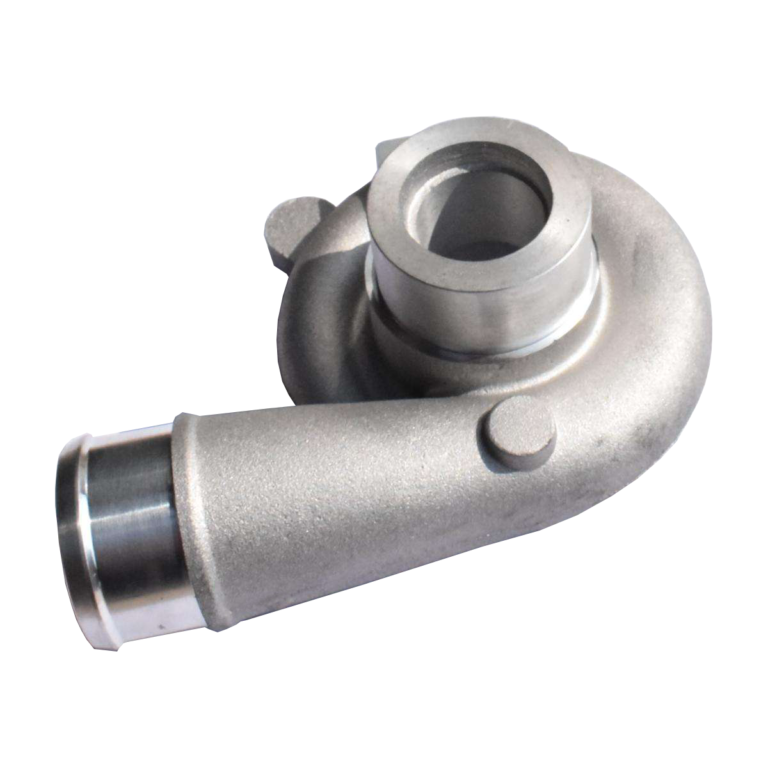
Furan or phenolic resin-bonded sand for precision ADI castings up to 5,000 kg. Excellent dimensional accuracy, smooth surface finish, and tight tolerance for complex geometries like pump bodies, turbine housings, and large gear blanks.
Shell Mold Casting
Pre-coated sand heated on metal patterns for near-net-shape ADI castings. Best suited for medium-volume runs of high-precision parts like cam lobes, rocker arms, and small-to-medium gears.
Green Sand Casting
Clay-bonded green sand for cost-efficient, high-volume ADI production. Ideal for agricultural wear parts, railway brake components, and heavy machinery brackets where unit economics matter.
Quality Assurance for ADI
Every ADI casting batch from Leesh undergoes:
- Spectrographic chemical analysis — Verifying base iron chemistry before austempering
- Tensile testing — Per EN 1564 requirements on machined test bars from separately cast samples
- Hardness testing — Brinell (HBW) per grade specification
- Microstructural examination — Confirming ausferrite morphology and nodularity (> 90%)
- Non-destructive testing — Magnetic particle (MT per EN 1369), ultrasonic (UT per EN 12680-1), and liquid penetrant (PT per EN 1371-1) as required
- Dimensional inspection — CMM and manual layout against customer drawings
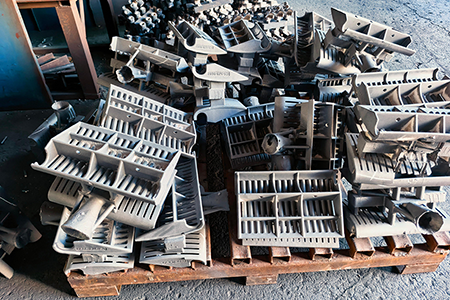
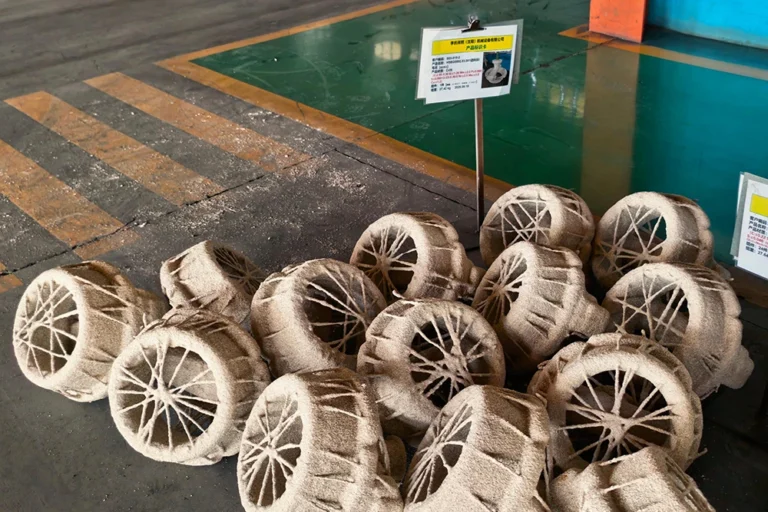
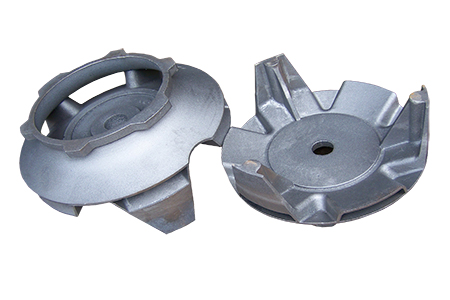
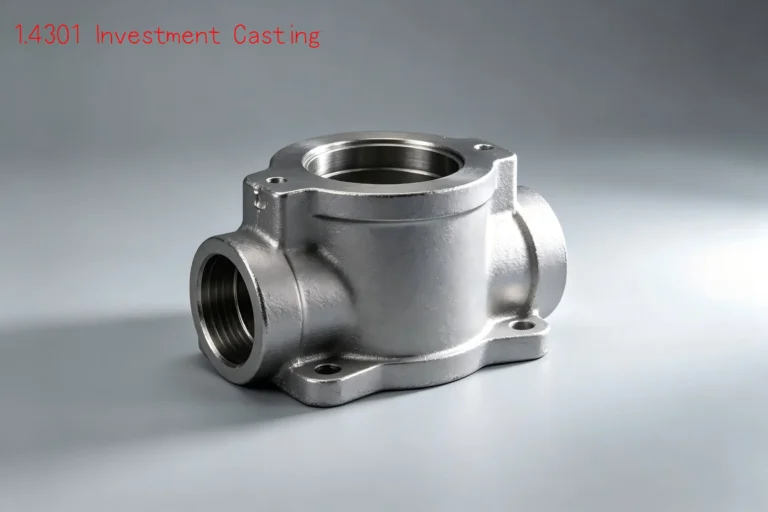
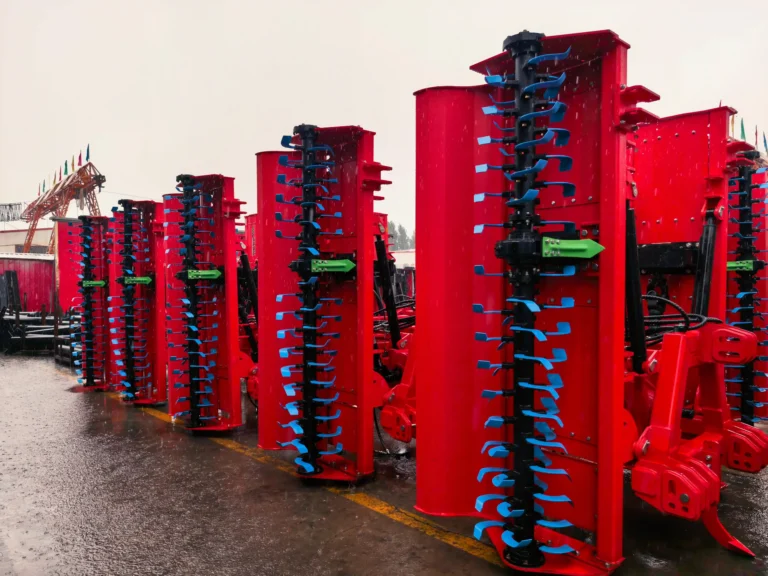
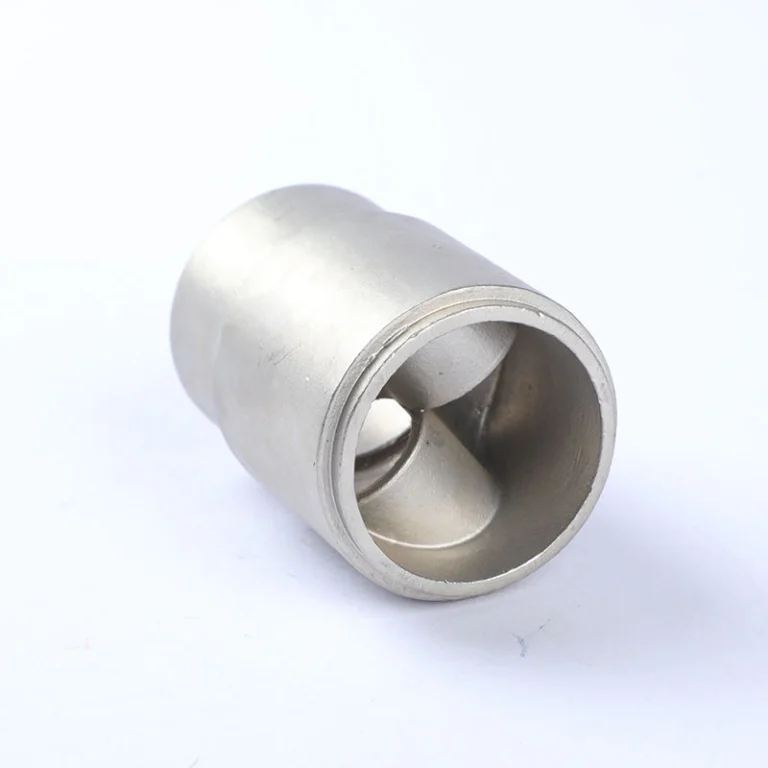
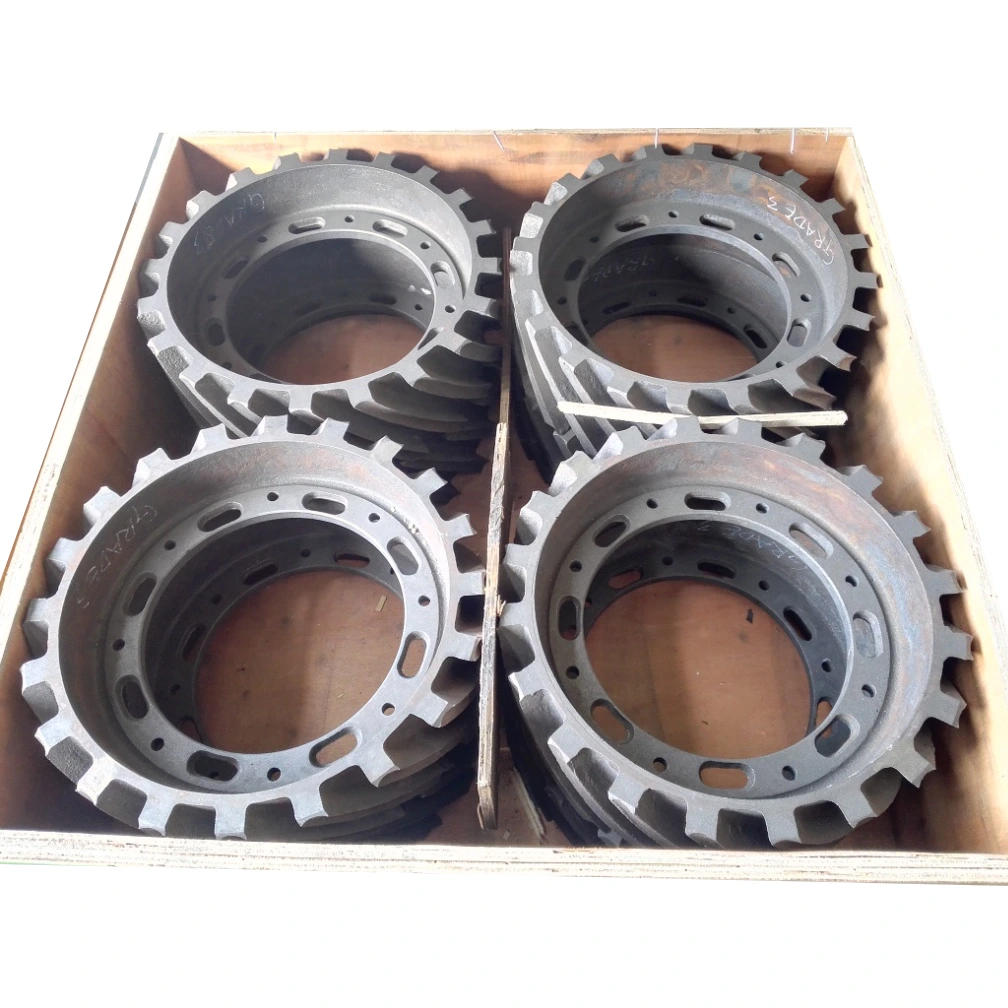
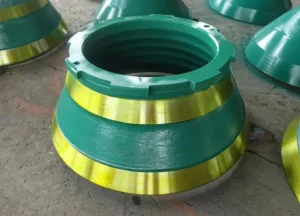
🏭 Leesh ADI Casting Products
Explore our featured ADI and wear-resistant casting products, all produced under EN 1564 and ASTM A897 standards at our in-house sand casting foundry.

📦 More Leesh castings: Sand Casting — Steel & Iron
5. Where Is ADI Used?
The unique combination of high strength, good ductility, excellent wear resistance, and 10% lower density than steel makes ADI the material of choice across diverse industries.
| Industry | Typical ADI Components | Recommended Grades |
|---|---|---|
| Automotive & Heavy Truck | Crankshafts, connecting rods, camshafts, suspension arms, brackets, steering knuckles | EN-GJS-1000-5, EN-GJS-1200-2 |
| Agriculture | Plow shares, disc blades, seed opener discs, threshing elements, tillage sweeps | EN-GJS-800-8, EN-GJS-1000-5 |
| Mining & Quarrying | Crusher concaves, mill liners, wear plates, grinding rolls, debarking wheels | EN-GJS-1200-2, EN-GJS-1400-1 |
| Railway | Brake discs, axle boxes, bogie components, rail fastening systems | EN-GJS-900-8, EN-GJS-1000-5 |
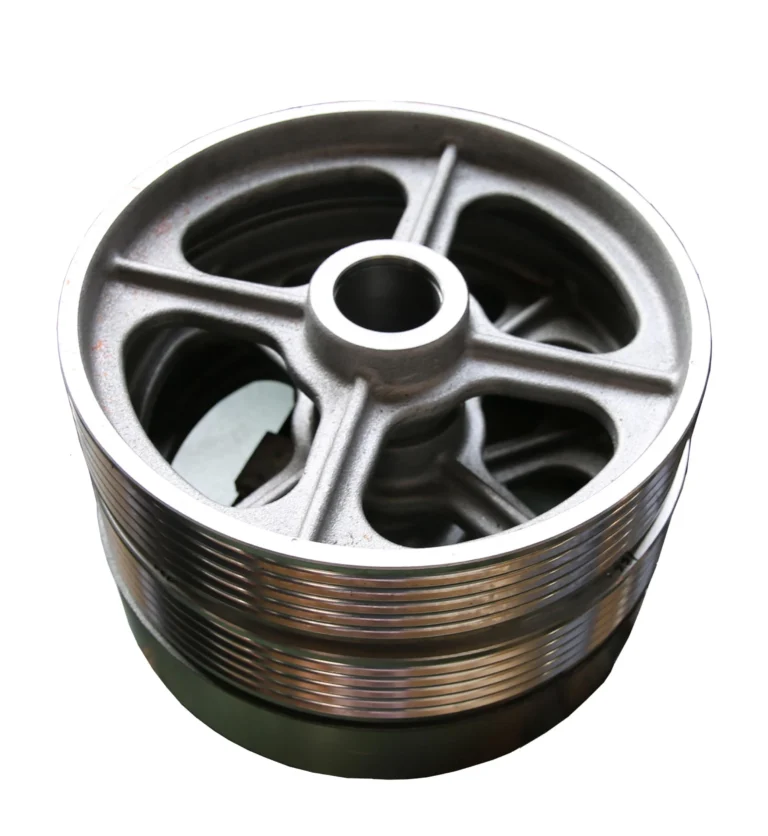
| Power Transmission | Gears, sprockets, pulleys, hubs, flanges, splined shafts | EN-GJS-1000-5, EN-GJS-1200-2 |
| Pumps & Fluid Handling | Impellers, pump housings, wear rings, valve bodies | EN-GJS-800-8, EN-GJS-900-8 |
6. Why Choose ADI Over Steel Forgings?
| ✅ ADI Advantages | |
|---|---|
| Weight | ~10% lighter than steel (7.1 vs 7.85 g/cm³) |
| Design Freedom | Casting permits complex internal geometries impossible in forging |
| Cost | Near-net-shape casting eliminates extensive machining of forged blanks |
| Damping | Graphite nodules provide superior vibration damping vs steel |
| Wear Resistance | Ausferrite work-hardens in service; ADI often outlasts hardened steel |
| Machinability | Better than hardened steel at equivalent strength levels |
| ⚠️ Considerations | |
|---|---|
| Section Sensitivity | Thick sections (> 100 mm) require careful alloy design for full hardenability |
| Heat Treatment | Requires precise salt-bath or fluidized-bed austempering — not all foundries have this capability (Leesh does) |
| Welding | Post-austempering welding is not recommended; design must account for this |
| Initial Tooling | Pattern/mold tooling investment required for new designs (amortized over production volume) |
7. International Standards Cross-Reference
ADI is specified under different standards worldwide. Leesh produces ADI castings certified to all major international specifications.
| Standard | Title | Region | Grades |
|---|---|---|---|
| EN 1564:2012 | Founding — Ausferritic spheroidal graphite cast irons | Europe / UK | 5 grades (EN-GJS-800-8 to EN-GJS-1400-1) |
| ISO 17804 | Founding — Ausferritic spheroidal graphite cast irons — Classification | International | 5 grades (ISO 17804/JS/800-8 to ISO 17804/JS/1400-1) |
| ASTM A897 / A897M | Standard Specification for Austempered Ductile Iron Castings | USA / International | 5 grades (Grade 1/900-650-09 to Grade 5/1600-1300-01) |
| SAE J2477 | Automotive Austempered Ductile (Nodular) Iron Castings | USA (Automotive) | 4 grades (D7507, D8006, D9005, D9502) |
8. Specify ADI with Leesh
When you send an RFQ for ADI castings, include these essential specifications and we'll handle the rest:
- Grade — e.g., EN-GJS-1000-5 per EN 1564:2012 (or ASTM A897 Grade 3 / ISO 17804/JS/1000-5)
- Drawing / 3D model — with critical dimensions, tolerances, and surface finish requirements
- Quantity — annual volume and batch size (for tooling and process optimization)
- Testing requirements — standard mechanical testing plus any additional NDT (MT, UT, PT), impact testing, or microstructural documentation
- Post-casting operations — machining, surface treatment, coating, assembly
Need ADI Castings?
Send your drawings and specifications — our engineering team will provide a feasibility review and quotation within 24 hours.
Contact Leesh →References & Further Reading
- EN 1564:2012 — Founding — Ausferritic spheroidal graphite cast irons. CEN, Brussels.
- FprEN 1564 — Draft revision. CEN/TC 190, in preparation.
- ISO 17804:2020 — Founding — Ausferritic spheroidal graphite cast irons — Classification. ISO, Geneva.
- ASTM A897/A897M-22 — Standard Specification for Austempered Ductile Iron Castings. ASTM International.
- Klimek, L. et al. (2024). Structural and Phase Analysis of the Ausferritic Ductile Cast Iron Matrix Obtained Through Heat Treatment and in Its Raw State.
- EN 1563:2018 — Founding — Spheroidal graphite cast irons. CEN, Brussels.
Published by LeeshPedia — Expert Engineering & Sourcing Insights from Leesh Holdings Co., Ltd.